Preschool movement games work best when the teacher can explain them in one demonstration and the children succeed before attention moves elsewhere. “No prep” at this age means no individual materials, no complicated stations, and no rules that depend on reading.
Children's activities change when the social setting changes. Short turns, demonstration instead of long explanation, and clear goals help children understand the loop before attention drifts. A little structure should make play easier, not turn it into another lesson.
Copy the leader
Use one large action at a time: reach high, touch knees, march, make a star, turn slowly, freeze.
After a few rounds, let a child choose the next action.
Avoid over-explaining. Demonstrating one round is often faster than giving a long verbal set of rules.
The same game can behave very differently with siblings, friends, or a preschool group. Short turns, demonstration instead of long explanation, and clear goals help children understand the loop before attention drifts. A little structure should make play easier, not turn it into another lesson.
Color movement:
Assign one action to each color already visible in the room. Red can mean freeze, green march, blue reach, yellow squat.
This adds memory without adding materials.
Animal movement
Use familiar animals with simple actions: frog jump, penguin walk, butterfly arms, elephant stomp. Keep the route short and avoid high-impact moves if the room is crowded.
Waiting time is one of the most common hidden problems in children's group activities. Short turns, demonstration instead of long explanation, and clear goals help children understand the loop before attention drifts. A little structure should make play easier, not turn it into another lesson.
For younger children, a quick first success matters more than a sophisticated rule set. Short turns, demonstration instead of long explanation, and clear goals help children understand the loop before attention drifts. A little structure should make play easier, not turn it into another lesson.
Music and freeze:
Play a short song, pause it, and freeze. For a calmer version, use slow music and statues rather than dancing.
Reach-the-target:
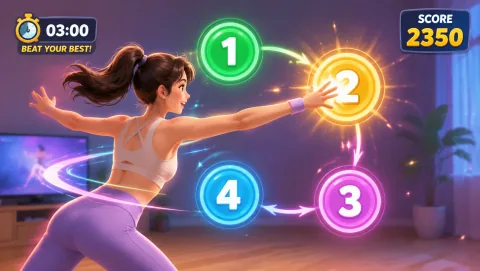
Point to large areas on a wall or screen and ask children to reach, point, or step toward them. This works well when you need movement without running.
A tested camera game, not a live experiment:
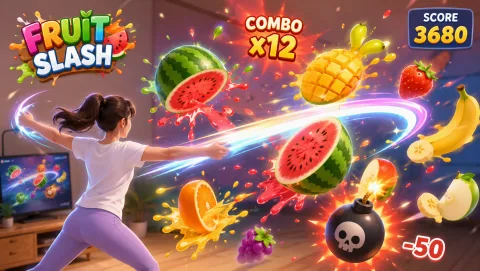
A simple webcam game can work in a preschool classroom if the teacher has already tested the device, camera position, and game. Use large targets, simple reaching, and short turns.
Do not make children wait while you troubleshoot permissions.
Keep the ending obvious
Preschool movement activities should stop cleanly. Use a final cue such as “freeze, hands on head, sit down” so the transition back to class does not become a second activity.
Five good games repeated across the month are more useful than fifty activities children have to learn from scratch.
Adults can improve the format without controlling every minute of it. Short turns, demonstration instead of long explanation, and clear goals help children understand the loop before attention drifts. A little structure should make play easier, not turn it into another lesson.
Make the activity work in the real timetable
Best fit: use this when the teacher can explain one visible rule, keep the first turn brief, and give students a clear way to watch, lead, or pause without being singled out.
Limit: it is a poor fit when setup takes longer than the learning goal, the room cannot be reset safely, or the scoring rewards speed over control. A lower-tech version may teach the same idea better.
If you are choosing: If you are choosing between formats, begin with the option that needs the fewest materials and the least movement across the room. Test one round before committing the whole class.