A classroom game is only “no prep” if you can start it with the room you already have. If you need to print cards, create teams in a spreadsheet, or troubleshoot a new website, save it for another day.
In a classroom, an activity has to work for the teacher as well as the students. The best formats can be repeated with new prompts so students know how to play before the teacher has finished explaining. That is what turns a fun idea into a classroom tool.
Activities that work in a real classroom
Category chain
Choose a category—animals, countries, verbs, foods, vocabulary from the lesson. Students take turns naming one item without repeating.
Set the finish signal before the first movement so students know exactly what happens when the round ends.
Stand up if...
Use light prompts: “stand if you prefer summer,” “stand if you have read this book,” or content-related questions. Avoid personal or sensitive prompts.
The most important classroom detail is often the transition nobody puts in the title. The best formats can be repeated with new prompts so students know how to play before the teacher has finished explaining. That is what turns a fun idea into a classroom tool.
Silent line-up
Students line up by birthday month, alphabetical first name, height, or another neutral category without speaking.
Teachers benefit more from reliable formats than from endless novelty. The best formats can be repeated with new prompts so students know how to play before the teacher has finished explaining. That is what turns a fun idea into a classroom tool.
Copy the movement
Teacher performs a short sequence; students repeat. Add one action each round.
A classroom game earns its place when it fits the room, the clock, and the lesson. The best formats can be repeated with new prompts so students know how to play before the teacher has finished explaining. That is what turns a fun idea into a classroom tool.
Twenty questions
Choose a lesson-related person, place, object, or concept. Students get 20 yes/no questions.
For school use, I would always think about the ending before starting the activity. The best formats can be repeated with new prompts so students know how to play before the teacher has finished explaining. That is what turns a fun idea into a classroom tool.
This or that
Assign opposite sides of the room—or opposite hand signals—to two choices. Use opinion questions or quick review prompts.
One-minute drawing
Give a prompt connected to the lesson or completely unrelated as a reset. Students draw for 60 seconds, then compare with a partner.
Number reaction
Assign four movements to numbers 1–4. Call the numbers in changing order. Students stay beside desks if space is limited.
One-screen game, only if already tested
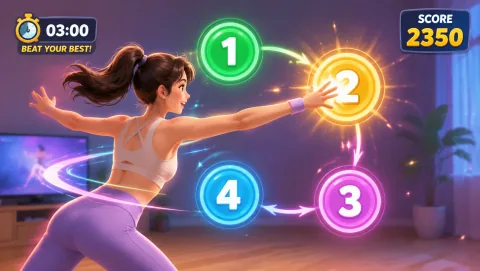
A browser game can be low prep when the projector, camera, and permissions are already working. MovePlay can be used for short reaction or pose activities, but a live troubleshooting session in front of 30 students is the opposite of no prep.
What makes it usable for a teacher
In a classroom, an activity has to work for the teacher as well as the students. Rules should be fast to explain, participation should not create a long queue, and the room needs a clear route back to learning. The teacher should finish with more control of the room, not less.
Why familiar games win
Teachers do not need an endless supply of novel activities. A familiar game takes less explanation, produces fewer behavior surprises, and ends more cleanly.
Keep five reliable no-prep games that work with your age group. The value is not novelty; it is having something you can use immediately when the lesson ends early or the room needs a reset.
One thing I would not ignore
The most important classroom detail is often the transition nobody puts in the title. Rules should be fast to explain, participation should not create a long queue, and the room needs a clear route back to learning. The teacher should finish with more control of the room, not less.
The teacher should get the room back
Teachers benefit more from reliable formats than from endless novelty. Rules should be fast to explain, participation should not create a long queue, and the room needs a clear route back to learning. The teacher should finish with more control of the room, not less.
Make the activity work in the real timetable
Best fit: use this when the teacher can explain one visible rule, keep the first turn brief, and give students a clear way to watch, lead, or pause without being singled out.
Limit: it is a poor fit when setup takes longer than the learning goal, the room cannot be reset safely, or the scoring rewards speed over control. A lower-tech version may teach the same idea better.
If you are choosing: If you are choosing between formats, begin with the option that needs the fewest materials and the least movement across the room. Test one round before committing the whole class.