Movement-based learning works best when movement helps students retrieve, classify, sequence, or represent information. Simply doing jumping jacks next to a worksheet may create a break, but it does not automatically make the academic task stronger.
Here are 25 ways to connect movement to learning without turning every lesson into PE.
For school use, I would always think about the ending before starting the activity. Movement should support the teaching goal or the reset the teacher actually needs, not exist just because technology makes it possible. That is what turns a fun idea into a classroom tool.
Activities to use in the lesson
Language and literacy
- Vocabulary corners: move or point to the definition that matches a word.
- Human sentence order: students arrange themselves as words in a sentence.
- Phonics actions: assign gestures to sounds and blend them physically.
- Spelling steps: take one step or movement per letter.
- Story sequence: move to numbered positions representing beginning, middle, and end.
- Character charades: act out a character while classmates identify evidence.
Keep the physical rule simple enough that working memory stays available for the subject itself.
Math
- Number-line steps: move left or right on an imaginary number line.
- Angle poses: create acute, right, and obtuse angles with arms.
- Multiplication movements: repeat an action in grouped sets.
- Fraction shapes: use arms or groups of students to represent parts of a whole.
- True-or-false sides: step left or right for equation judgments.
- Coordinate grid: use floor positions to represent ordered pairs.
In a classroom, an activity has to work for the teacher as well as the students. The best formats can be repeated with new prompts so students know how to play before the teacher has finished explaining. That is what turns a fun idea into a classroom tool.
Science
- Particle movement: act out solids, liquids, and gases.
- Food-chain sequence: students place organisms in order.
- Orbit model: use positions to represent relative motion.
- Force charades: push, pull, friction, gravity, acceleration.
- Life-cycle stations: move through stages in order.
Use this for review or retrieval before using it for brand-new material that already demands a lot of attention.
Social studies and geography
- Human timeline: students arrange events chronologically.
- Map directions: face or step north, south, east, and west.
- Continent corners: respond to geography questions by moving to a region.
- Trade-route relay: pass information or tokens through a historical route.
Directional and location concepts fit movement naturally. Use the room as a simple map, but keep accuracy in the geography answer more important than who gets there first.
Memory and review
- Movement sequence recall: attach a gesture to each key concept.
- Reaction quiz: map answer choices to four movements.
- Teach with a pose: students invent a body shape that represents an idea.
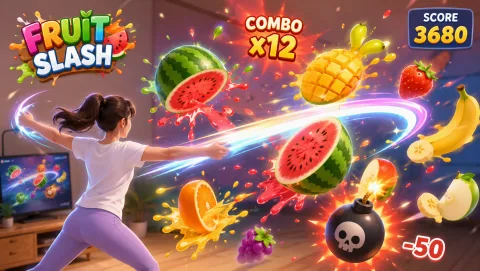
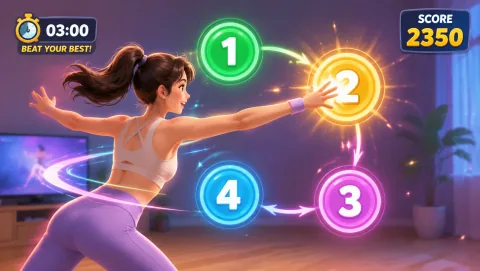
- One-screen review game: use projected cues or a motion game for rapid response.
The most important classroom detail is often the transition nobody puts in the title. The best formats can be repeated with new prompts so students know how to play before the teacher has finished explaining. That is what turns a fun idea into a classroom tool.
How to keep the learning central:
Teachers benefit more from reliable formats than from endless novelty. The best formats can be repeated with new prompts so students know how to play before the teacher has finished explaining. That is what turns a fun idea into a classroom tool.
Use movement when it clarifies the idea
Do not force movement into every topic. It is most useful when students need to remember order, categories, direction, relationships, or vocabulary—or when a short physical change helps reset attention.
Movement-based learning is a teaching tool, not a claim that every lesson becomes more effective simply because students stand up.
One thing I would not ignore:
A classroom game earns its place when it fits the room, the clock, and the lesson. The best formats can be repeated with new prompts so students know how to play before the teacher has finished explaining. That is what turns a fun idea into a classroom tool.
Use movement to clarify:
For school use, I would always think about the ending before starting the activity. The best formats can be repeated with new prompts so students know how to play before the teacher has finished explaining. That is what turns a fun idea into a classroom tool.
Make the activity work in the real timetable
Best fit: use this when the teacher can explain one visible rule, keep the first turn brief, and give students a clear way to watch, lead, or pause without being singled out.
Limit: it is a poor fit when setup takes longer than the learning goal, the room cannot be reset safely, or the scoring rewards speed over control. A lower-tech version may teach the same idea better.
If you are choosing: If you are choosing between formats, begin with the option that needs the fewest materials and the least movement across the room. Test one round before committing the whole class.