Homeschool families do not need to recreate a school gym at home to build movement into the day. Short, repeatable activities can fit between subjects, before focused work, or as part of a broader PE routine.
For school use, I would always think about the ending before starting the activity. If the projector, camera, or permissions need live troubleshooting, the activity is not low-prep that day. If another teacher can run it tomorrow from a short note, the format is probably strong.
Reliable formats to keep in rotation
Subject-transition movement
Use three to five minutes between lessons:
- march and reach;
- movement memory;
- balance;
- dance to one song;
- short outdoor walk;
- reaction game.
The goal is a reset, not a formal workout every time.
Decide in advance what happens when attendance is twice what you expected.
Family walk with a task
Add observation prompts: count certain colors, identify plants, estimate distance, photograph shapes, or map the route afterward.
A quiet alternative is worth keeping beside every high-energy option.
Home circuit
Create four stations using ordinary space:
- squats or sit-to-stands;
- target toss;
- balance;
- rhythm or footwork.
Change the challenge each week without changing the structure.
Reuse the format with a new theme before inventing an entirely new activity.
Movement-based learning
Use the body to practice spelling, multiplication, geography directions, vocabulary, or sequence recall.
This works best when movement supports the concept rather than simply being added after every answer.
If the activity depends on one specific device or room, document a fallback at the same time.
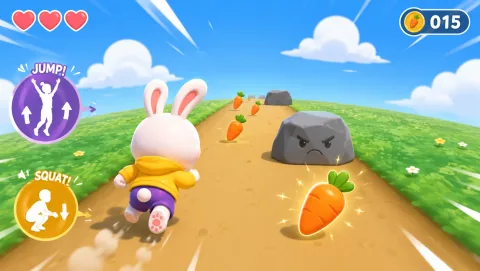
Webcam motion games
A browser motion game can be one indoor option when weather is poor or a child wants game-like feedback. Choose the movement style based on room size and the child’s interest.
MovePlay can fit as one resource among outdoor play, sports, walks, free play, and structured exercise.
Write the setup in a few lines so another adult can run it without needing a verbal handover.
Document only what you need
If your local homeschool requirements call for PE records, keep simple notes on date, activity, and approximate duration. Do not turn every movement break into paperwork.
A strong homeschool movement routine is flexible enough to survive weather, travel, mixed-age siblings, and changing academic schedules.
What makes it repeatable
In a classroom, an activity has to work for the teacher as well as the students. Movement should support the teaching goal or the reset the teacher actually needs, not exist just because technology makes it possible. If another teacher can run it tomorrow from a short note, the format is probably strong.
Let children choose part of the plan:
Offer a weekly menu: one outdoor activity, one skill, one game, one family activity. Choice can make a homeschool PE routine easier to sustain.
One thing I would not ignore
The most important classroom detail is often the transition nobody puts in the title. Movement should support the teaching goal or the reset the teacher actually needs, not exist just because technology makes it possible. If another teacher can run it tomorrow from a short note, the format is probably strong.
Make it easy to hand over:
The strongest program idea is the one staff can run safely, repeatedly, and with less stress when the day changes.
Make the activity work in the real timetable
Best fit: use this when the teacher can explain one visible rule, keep the first turn brief, and give students a clear way to watch, lead, or pause without being singled out.
Limit: it is a poor fit when setup takes longer than the learning goal, the room cannot be reset safely, or the scoring rewards speed over control. A lower-tech version may teach the same idea better.
If you are choosing: If you are choosing between formats, begin with the option that needs the fewest materials and the least movement across the room. Test one round before committing the whole class.