Starting an active routine does not require proving how unfit you are on day one. A low-pressure beginning should feel manageable enough that you can repeat it tomorrow.
It helps to judge movement by repeatability before ambition. Short walks, a few active game rounds, music, mobility work, or a simple skill can all fit without turning the day into a training plan. The aim is to make movement easier to return to.
Walk at a comfortable pace
Start with a duration you can finish without dreading the next session. Add time or speed gradually.
The useful question is what you would still do on a busy or low-energy day. Short walks, a few active game rounds, music, mobility work, or a simple skill can all fit without turning the day into a training plan. The aim is to make movement easier to return to.
Many adults need a smaller commitment, not a more sophisticated workout. Short walks, a few active game rounds, music, mobility work, or a simple skill can all fit without turning the day into a training plan. The aim is to make movement easier to return to.
Use sit-to-stands and basic movements:
A stable chair, comfortable squats or sit-to-stands, calf raises, reaches, and side steps can create a simple home routine.
Try movement games
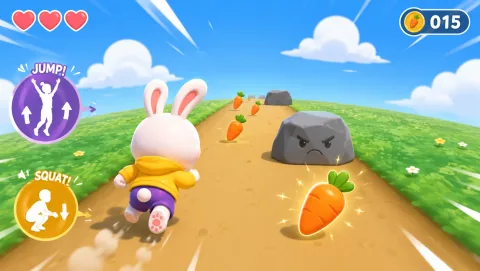
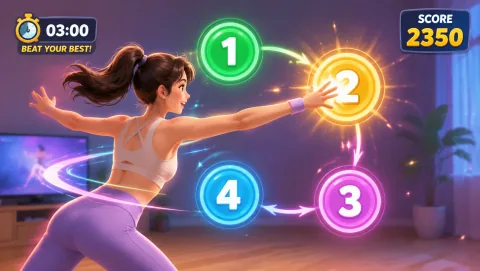
Games can reduce the feeling of “testing yourself.” Choose low-complexity reaction, rhythm, or movement titles and stop before fatigue ruins the experience.
With MovePlay, reach- and hand-focused games are a gentler starting point than jump-heavy full-body games.
For adults, the hardest part is often starting rather than knowing what movement is available. If an activity is enjoyable enough to repeat, it has an advantage over a theoretically optimal routine you keep avoiding. The aim is to make movement easier to return to.
Use music
Move for one song. If that feels easy, add a second. You do not need a formal dance routine.
A sustainable active routine usually has a very low-friction version. If an activity is enjoyable enough to repeat, it has an advantage over a theoretically optimal routine you keep avoiding. The aim is to make movement easier to return to.
Choose low-impact options:
Walking, cycling, swimming, controlled stepping, and many motion games can be adjusted to lower impact. Avoid jumping simply because it appears in a popular workout.
Use perceived effort:
A simple talk test or personal effort scale can be more useful than chasing a consumer calorie estimate. Your “moderate” effort will not look identical to someone else’s.
Progress one variable at a time:
Increase duration, frequency, speed, or complexity—not all four in the same week.
Know when to seek individual advice
If you have a medical condition, significant pain, dizziness, or specific exercise restrictions, a general article cannot replace guidance from a qualified clinician.
Beginners benefit from consistency more than dramatic first sessions. The most important early skill is learning what level of movement you can finish and feel willing to repeat.
It helps to judge movement by repeatability before ambition. If an activity is enjoyable enough to repeat, it has an advantage over a theoretically optimal routine you keep avoiding. The aim is to make movement easier to return to.
Let the room decide the intensity
Best fit: use this when the available area is clear enough for the main movement and everyone can see the boundary without guessing where furniture or another player begins.
Limit: it is not the right answer when the room has fragile objects, a slippery floor, a low ceiling, or too little space to stop comfortably. More intensity is not an improvement if control disappears.
If you are choosing: If you are choosing between activities, pick the one that can be made smaller without losing its point. Reaching, reacting, or stepping in place may be a better choice than jumping or travelling across the room.