Activity staff rarely need another complicated program. They need reliable sessions that can be prepared quickly, repeated with small changes, and adapted when attendance or energy is different from expected.
Simple rules do not require childish presentation. Technology should disappear into the background; if setup dominates the session, a simpler activity is the better choice. A good group format includes the room without ranking people's limitations.
Music prompt circle
Choose a decade or theme and invite participants to name songs, artists, dances, or memories connected with it.
Mixed ability is normal in older-adult groups, not an edge case. Technology should disappear into the background; if setup dominates the session, a simpler activity is the better choice. A good group format includes the room without ranking people's limitations.
A good activity can stay challenging while becoming easier to access physically. Technology should disappear into the background; if setup dominates the session, a simpler activity is the better choice. A good group format includes the room without ranking people's limitations.
Large-screen quiz
Use images and short questions rather than dense text. Teams can discuss answers together.
Short rounds make rest easier and reduce the social pressure to continue when someone is tired.
The useful design question is how much choice the participant has. Technology should disappear into the background; if setup dominates the session, a simpler activity is the better choice. A good group format includes the room without ranking people's limitations.
Movement dice
Use a large foam die or digital randomizer. Each number corresponds to a simple seated or standing action. Keep every movement optional.
Activities for older adults should begin with the person, not the age label. Everyday engagement can be valuable on its own without making claims about treatment, cognition, or fall prevention. A good group format includes the room without ranking people's limitations.
Target challenge:
Use beanbags, soft balls, floor targets, or large visual targets on a screen. Score accuracy rather than speed.
Photo conversation cards:
Show images of places, objects, food, or historic events and use them as conversation prompts.
Five-song rhythm session:
Pick five songs and add one simple repeated movement to each. The format is easy for another staff member to run.
Browser game station
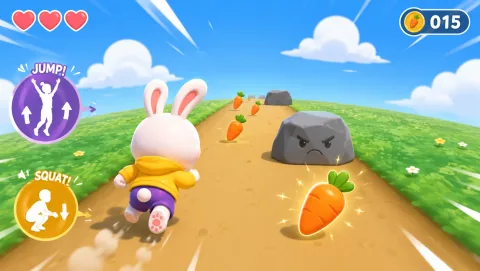
A webcam game can be one station rather than the entire program. Pre-test the device, camera position, and lighting, and use rounds short enough that waiting participants stay interested.
The most useful low-prep activity bank is small, tested, and repeatable. Rotate themes instead of rebuilding the entire session every week.
Simple rules do not require childish presentation. Everyday engagement can be valuable on its own without making claims about treatment, cognition, or fall prevention. A good group format includes the room without ranking people's limitations.
Keep the social pressure lower than the benefit
Best fit: this is useful when people can join for a short reset, understand the invitation immediately, and leave without having to explain why they are sitting out.
Limit: it is a poor choice when participation is treated as a performance, the activity competes with a serious meeting, or colleagues have very different comfort levels with cameras and movement.
If you are choosing: If you are choosing between ideas, prefer a short optional round with a personal target over a public leaderboard. The goal is an easier break, not another workplace metric.