Low-impact motion games emphasize controlled movement without jumping or hard landings. For older adults, they can be a useful recreational option when the goal is to stay engaged and moving at a comfortable level.
Simple rules do not require childish presentation. Technology should disappear into the background; if setup dominates the session, a simpler activity is the better choice. That flexibility is what makes a format usable across very different days and participants.
Reach-and-touch games
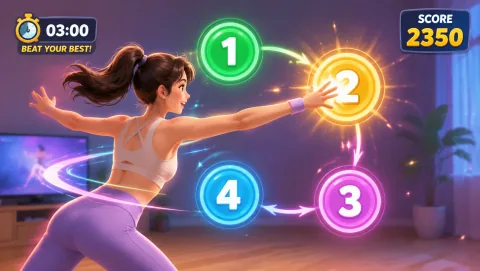
Use large targets placed at comfortable heights. The player reaches, points, or taps in response to colors, numbers, or cues.
Mixed ability is normal in older-adult groups, not an edge case. Technology should disappear into the background; if setup dominates the session, a simpler activity is the better choice. That flexibility is what makes a format usable across very different days and participants.
Short rounds make rest easier and reduce the social pressure to continue when someone is tired.
Slow side-step games
For people comfortable standing, use small lateral steps between two or three positions. Keep a stable support nearby when appropriate.
A good activity can stay challenging while becoming easier to access physically. Technology should disappear into the background; if setup dominates the session, a simpler activity is the better choice. That flexibility is what makes a format usable across very different days and participants.
Rhythm movement:
Clap, tap, step, or move the arms to a steady beat. Rhythm gives the activity structure without demanding speed.
Mirror play
One player leads smooth movements while the other copies. This can be standing or seated.
The useful design question is how much choice the participant has. Technology should disappear into the background; if setup dominates the session, a simpler activity is the better choice. That flexibility is what makes a format usable across very different days and participants.
Balance-oriented challenges:
Simple weight shifts or supported balance tasks may be suitable for some older adults, but should never be framed as fall-prevention treatment unless the activity has been clinically designed and evaluated for that purpose.
Digital motion games:
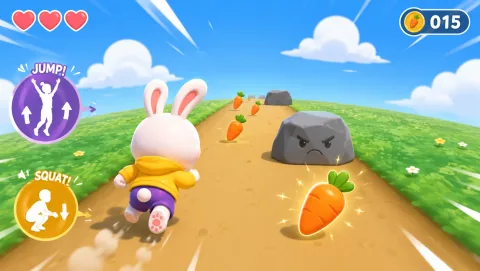
Webcam and console games can provide targets and scores. For MovePlay, lower-movement and hand-focused titles are the logical starting point; full-body games involving jumping or repeated deep squats are a different category.
Use perceived effort:
The same game can feel easy to one person and tiring to another. Keep the pace conversational and stop if the player feels dizzy, unsteady, painful, or unusually short of breath.
Keep the goal recreational
A low-impact game can support activity and enjoyment. It is not automatically a rehabilitation program, cognitive therapy, or substitute for prescribed exercise.
The best version is one the person can play comfortably, understand quickly, and choose to repeat.
Activities for older adults should begin with the person, not the age label. Everyday engagement can be valuable on its own without making claims about treatment, cognition, or fall prevention. That flexibility is what makes a format usable across very different days and participants.
Choose it for the group in front of you
Best fit: this works when the ages and confidence levels can share one simple goal, with an adult able to explain the first round and step in if the room loses focus.
Limit: it is a weaker choice when children are tired, the ages are far apart, or one person is expected to perform in front of everyone. A quieter role or a shorter round may be the better answer.
If you are choosing: start with the smallest version that can succeed in the available space. Add speed, scoring, or competition only after the group understands the basic action.