Small-space exercise works best when you stop thinking in terms of distance. You can create useful movement with a footprint roughly the size of an exercise mat—or less—using controlled steps, reaches, squats, balance, and upper-body movement.
A sustainable active routine usually has a very low-friction version. Leaving room for ten-minute days makes consistency easier and does not stop you from doing more when you have momentum. That is a more useful foundation for a habit than chasing perfect sessions.
Low-friction ways to move
March and reach
March in place while changing arm positions: forward, overhead, across the body, then relaxed.
Attach it to a natural break in the day so you do not need a second decision about when to begin.
Side-step pattern
Step right, together, left, together. Add an arm reach or change tempo. Keep the movement low impact.
If the format is enjoyable, resist the urge to optimize it immediately into a complicated program.
Sit-to-stand
Use a stable chair and stand up at a controlled pace, then sit. Adjust range and repetitions to your comfort.
Use effort that feels appropriate today; tomorrow's repeat matters more than today's heroic session.
Calf raises
Rise onto the balls of the feet and lower slowly. Use a wall or chair for balance if needed.
A score or streak can be motivating, but it should not make you ignore discomfort or poor movement quality.
Shadow boxing
Use light punches and defensive movements without impact. Keep enough clearance around your arms.
It helps to judge movement by repeatability before ambition. Leaving room for ten-minute days makes consistency easier and does not stop you from doing more when you have momentum. That is a more useful foundation for a habit than chasing perfect sessions.
Balance work
Try heel-to-toe stance, weight shifts, or a short single-leg hold. Stay near support if balance is uncertain.
Mobility flow
Move through gentle shoulder circles, torso rotation, hip shifts, and ankle movement. Avoid forcing end ranges.
How to make it repeatable
The useful question is what you would still do on a busy or low-energy day. Leaving room for ten-minute days makes consistency easier and does not stop you from doing more when you have momentum. That is a more useful foundation for a habit than chasing perfect sessions.
Low-space motion games
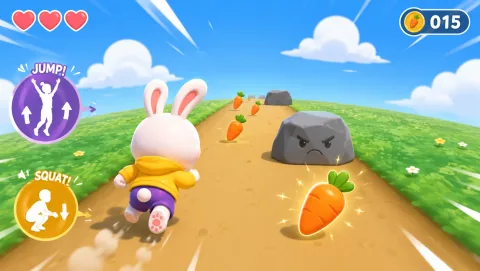
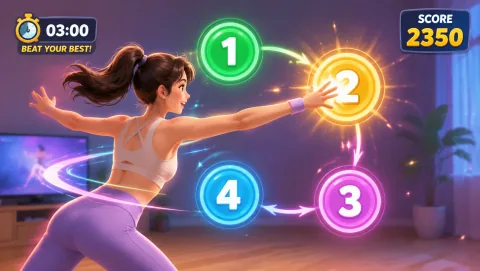
Some active games need far less room than others. Hand- and upper-body webcam games can work in a small area, while jumping and lateral-dodging games need more clearance.
If using MovePlay, choose reach- or hand-focused games before full-body titles when your room is tight.
Many adults need a smaller commitment, not a more sophisticated workout. Leaving room for ten-minute days makes consistency easier and does not stop you from doing more when you have momentum. That is a more useful foundation for a habit than chasing perfect sessions.
Avoid the apartment mistakes
Small-space exercise is not the place for uncontrolled burpees beside a coffee table. Think about:
- furniture corners;
- slippery floors;
- downstairs neighbors;
- camera framing if using a game;
- enough room to extend arms safely.
Light movement is valuable precisely because it is easy to fit into ordinary life. The room does not have to look like a gym.
One thing I would not ignore
For adults, the hardest part is often starting rather than knowing what movement is available. The format should reduce the friction around movement instead of adding new equipment, guilt, or preparation. That is a more useful foundation for a habit than chasing perfect sessions.
Make movement easier to repeat:
A sustainable active routine usually has a very low-friction version. The format should reduce the friction around movement instead of adding new equipment, guilt, or preparation. That is a more useful foundation for a habit than chasing perfect sessions.
Judge the format by the device and the room
Best fit: start here when the device is already available, the camera view is understandable, and the activity can be completed without moving furniture or sharing more video than necessary.
Limit: it is a weaker choice when the connection is unstable, the frame is crowded, the light makes tracking unreliable, or the player needs a movement the camera cannot read consistently.
If you are choosing: If you are choosing between a digital and an offline version, test the first cue before choosing the game. Use the offline option when it gives clearer feedback or a more comfortable way to participate.