Intergenerational programs work best when younger and older participants need each other, rather than simply doing the same activity in the same room.
Activities for older adults should begin with the person, not the age label. People should be able to watch first, slow down, change roles, or skip a round without being singled out. That flexibility is what makes a format usable across very different days and participants.
Teach-each-other games
Older participants teach a card, tile, craft, song, or traditional game. Younger participants teach a simple digital or movement game.
Simple rules do not require childish presentation. People should be able to watch first, slow down, change roles, or skip a round without being singled out. That flexibility is what makes a format usable across very different days and participants.
Mixed ability is normal in older-adult groups, not an edge case. People should be able to watch first, slow down, change roles, or skip a round without being singled out. That flexibility is what makes a format usable across very different days and participants.
Local history scavenger hunt
Use photos, maps, and short clues. Older adults contribute stories; younger participants handle searching, scanning, or presentation.
Short rounds make rest easier and reduce the social pressure to continue when someone is tired.
A good activity can stay challenging while becoming easier to access physically. People should be able to watch first, slow down, change roles, or skip a round without being singled out. That flexibility is what makes a format usable across very different days and participants.
Mixed-age team quiz
Write questions across several decades so no single age group has all the answers.
The useful design question is how much choice the participant has. People should be able to watch first, slow down, change roles, or skip a round without being singled out. That flexibility is what makes a format usable across very different days and participants.
Recipe and story exchange
Prepare a simple food item while recording the story behind the recipe. Younger participants can create the digital version.
Activities for older adults should begin with the person, not the age label. Technology should disappear into the background; if setup dominates the session, a simpler activity is the better choice. That flexibility is what makes a format usable across very different days and participants.
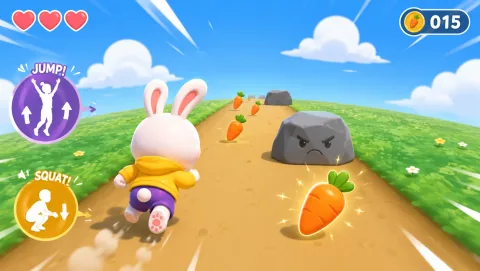
One-screen movement challenge:
Use simple target, pose, or reaction games in mixed-age teams. Let teams decide who plays each round and include seated or observer roles.
Build something together:
Create a garden box, poster, family tree, photo wall, or community display over several sessions.
End with a shared outcome
A performance, digital album, recipe book, leaderboard, or exhibition gives the group a reason to work together beyond a single session.
The strongest intergenerational activities avoid treating one generation as the helper and the other as the recipient. Both sides should have knowledge, skills, and choices that matter.
Simple rules do not require childish presentation. Technology should disappear into the background; if setup dominates the session, a simpler activity is the better choice. That flexibility is what makes a format usable across very different days and participants.
Keep the social pressure lower than the benefit
Best fit: this is useful when people can join for a short reset, understand the invitation immediately, and leave without having to explain why they are sitting out.
Limit: it is a poor choice when participation is treated as a performance, the activity competes with a serious meeting, or colleagues have very different comfort levels with cameras and movement.
If you are choosing: If you are choosing between ideas, prefer a short optional round with a personal target over a public leaderboard. The goal is an easier break, not another workplace metric.