Workshop breaks need to do more than fill time. After an hour of listening or discussion, a good break changes pace and gives participants a low-stakes way to interact before the next working block.
Workplace movement should fit inside work rather than pretending the office has become a gym. Hybrid colleagues may have only chair-sized space, weak cameras, or no interest in performing in front of a group. That is what keeps a small intervention from becoming another obligation.
Visual puzzle station
Put one or two puzzles on a screen or wall. People can solve them informally during the break without being gathered for a formal activity.
For teams, a good energizer is deliberately modest. Hybrid colleagues may have only chair-sized space, weak cameras, or no interest in performing in front of a group. That is what keeps a small intervention from becoming another obligation.
The social design matters as much as the movement itself. Hybrid colleagues may have only chair-sized space, weak cameras, or no interest in performing in front of a group. That is what keeps a small intervention from becoming another obligation.
Reaction challenge
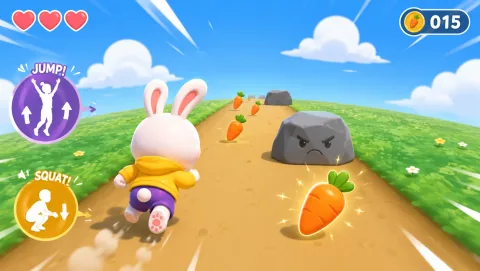
Set up a short optional reaction game. One person plays for 60 seconds while others watch or compare later.
A browser motion game can work here because it is visible and easy to rotate, but only if the technical setup has been tested in advance.
A break between meetings only works if it respects the context around it. Hybrid colleagues may have only chair-sized space, weak cameras, or no interest in performing in front of a group. That is what keeps a small intervention from becoming another obligation.
Collaborative drawing:
Leave a large sheet or digital canvas with a prompt such as “draw the customer journey in one metaphor.” Participants add something during the break.
Quick build table
Provide a small number of blocks or common materials and one constraint. People can join for two minutes and leave.
In professional settings, low pressure usually beats high enthusiasm. Hybrid colleagues may have only chair-sized space, weak cameras, or no interest in performing in front of a group. That is what keeps a small intervention from becoming another obligation.
Walk-and-talk cards:
Offer optional prompts for pairs who want to walk during the break. Keep them related to the workshop rather than forcing personal disclosure.
Mini leaderboard:
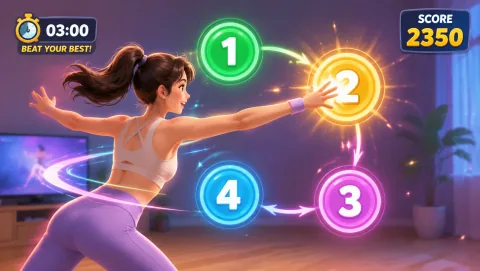
Track a harmless skill—reaction score, paper-airplane accuracy, puzzle time—across the day. Participation stays voluntary.
Music and movement corner:
At longer offsites, a simple standing or movement area can help participants who do not want another seated break.
Do not over-program the break
Some people genuinely need coffee, quiet, or time to answer messages. The game should be available, not compulsory.
An interactive break works best when it creates energy for the next session without consuming the recovery time participants were supposed to have.
Workplace movement should fit inside work rather than pretending the office has become a gym. A one-song reset or 90-second reaction challenge can change the room without becoming another agenda item. That is what keeps a small intervention from becoming another obligation.
Keep the social pressure lower than the benefit
Best fit: this is useful when people can join for a short reset, understand the invitation immediately, and leave without having to explain why they are sitting out.
Limit: it is a poor choice when participation is treated as a performance, the activity competes with a serious meeting, or colleagues have very different comfort levels with cameras and movement.
If you are choosing: If you are choosing between ideas, prefer a short optional round with a personal target over a public leaderboard. The goal is an easier break, not another workplace metric.