Indoor recess should still feel like recess. Students need choice, social time, and a break from formal instruction—not another worksheet with a game label attached.
A good indoor plan includes active, social, and quiet options so the whole class is not forced into one activity.
Teachers benefit more from reliable formats than from endless novelty. Movement should support the teaching goal or the reset the teacher actually needs, not exist just because technology makes it possible. If another teacher can run it tomorrow from a short note, the format is probably strong.
Active options
Freeze dance: short songs, no elimination.
Movement challenge cards: students choose from balance, squat, reach, rhythm, or pose tasks.
Balloon keep-up: only if the room and school rules allow it.
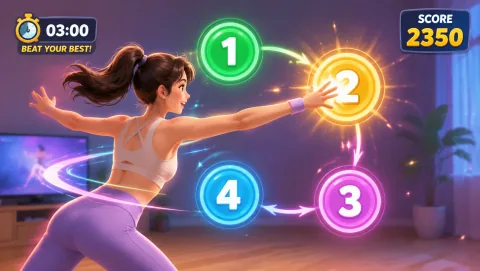
Projected movement game: use a simple follow-along or webcam game with one player or small group at a time.
Give the station a clear zone, time limit, and reset instruction before the first student starts.
Social games
Try charades, Pictionary-style drawing, categories, twenty questions, collaborative stories, or simple card games if available.
These preserve the social purpose of recess without needing much floor space.
Offer an easier movement range without making it feel like a public 'easy version.'
Quiet options
Offer reading, puzzles, drawing, LEGO or blocks, origami, coloring, or a calm digital activity.
Some students need a quieter break from the classroom even when outdoor recess is cancelled.
Keep a non-digital station ready so a browser or camera problem does not stop the lesson.
What makes it work in PE
A classroom game earns its place when it fits the room, the clock, and the lesson. Movement should support the teaching goal or the reset the teacher actually needs, not exist just because technology makes it possible. If another teacher can run it tomorrow from a short note, the format is probably strong.
Use zones rather than one whole-class game
If the room allows it, create three zones:
- move;
- play/social;
- quiet.
Students can choose within boundaries. This reduces the pressure on one activity to satisfy every student.
Where MovePlay can fit:
A browser motion game can be one active station. Short games such as Reaction or Whack A Mole are easier to rotate through than long sessions. Test the camera, network, and device policy before recess begins.
Keep recess different from PE
Indoor recess does not need learning objectives, performance feedback, or mandatory movement for every child. Its job is still to provide a break.
The best rainy-day plan gives students enough structure to keep the room manageable while preserving some freedom to choose how they use the time.
One thing I would not ignore
For school use, I would always think about the ending before starting the activity. Movement should support the teaching goal or the reset the teacher actually needs, not exist just because technology makes it possible. If another teacher can run it tomorrow from a short note, the format is probably strong.
A station, not the whole lesson
In a classroom, an activity has to work for the teacher as well as the students. The best formats can be repeated with new prompts so students know how to play before the teacher has finished explaining. If another teacher can run it tomorrow from a short note, the format is probably strong.
Make the activity work in the real timetable
Best fit: use this when the teacher can explain one visible rule, keep the first turn brief, and give students a clear way to watch, lead, or pause without being singled out.
Limit: it is a poor fit when setup takes longer than the learning goal, the room cannot be reset safely, or the scoring rewards speed over control. A lower-tech version may teach the same idea better.
If you are choosing: If you are choosing between formats, begin with the option that needs the fewest materials and the least movement across the room. Test one round before committing the whole class.