Childcare centers need indoor movement options that work when weather, heat, smoke, or space limits outdoor play. The best choices are repeatable, easy for different staff members to run, and flexible across small age bands.
Waiting time is one of the most common hidden problems in children's group activities. Team scores, shared goals, and meaningful roles for the waiting child often fix the structure more effectively than adding more rules. A little structure should make play easier, not turn it into another lesson.
Movement stations
Use three or four simple stations rather than one complicated group activity:
- reach-and-touch targets;
- balance line or floor spots;
- soft-ball target toss;
- movement cards;
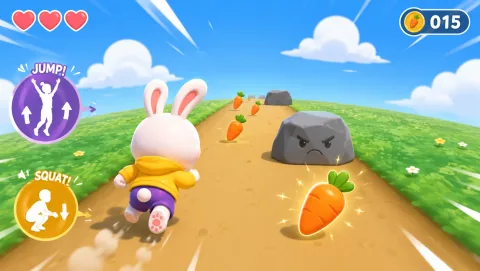
- a short digital reaction station if the device is already tested.
Small groups reduce waiting.
For younger children, a quick first success matters more than a sophisticated rule set. Team scores, shared goals, and meaningful roles for the waiting child often fix the structure more effectively than adding more rules. A little structure should make play easier, not turn it into another lesson.
Avoid over-explaining. Demonstrating one round is often faster than giving a long verbal set of rules.
Adults can improve the format without controlling every minute of it. Team scores, shared goals, and meaningful roles for the waiting child often fix the structure more effectively than adding more rules. A little structure should make play easier, not turn it into another lesson.
Hallway or room circuits
Create a route with walking, stepping, reaching, and stopping points. Avoid running if the space is narrow or shared.
Children's activities change when the social setting changes. Preschool groups need forgiving pacing and visible feedback; older children may care more about challenge and whether the activity feels too young. A little structure should make play easier, not turn it into another lesson.
Music prompts
Use short songs for march, sway, clap, freeze, or copy-the-leader rounds. The same playlist can support many sessions with different movement prompts.
The same game can behave very differently with siblings, friends, or a preschool group. Preschool groups need forgiving pacing and visible feedback; older children may care more about challenge and whether the activity feels too young. A little structure should make play easier, not turn it into another lesson.
Picture-cue movement
Show an animal, weather symbol, shape, or object and ask children to invent a movement for it. This works across language differences because the visual cue carries the activity.
Waiting time is one of the most common hidden problems in children's group activities. Preschool groups need forgiving pacing and visible feedback; older children may care more about challenge and whether the activity feels too young. A little structure should make play easier, not turn it into another lesson.
Large-target screen play:
A projected or webcam-based activity can work as one station if children understand the goal quickly and staff can reset it without technical help. Use large visuals and short turns.
Build staff handover into the activity
Each recurring activity should have a one-page note with:
- age range;
- room needed;
- approximate time;
- materials;
- safety notes;
- one easier version;
- one backup.
A childcare activity is operationally successful when another staff member can run it tomorrow without needing the person who invented it.
For younger children, a quick first success matters more than a sophisticated rule set. Preschool groups need forgiving pacing and visible feedback; older children may care more about challenge and whether the activity feels too young. A little structure should make play easier, not turn it into another lesson.
Make the activity work in the real timetable
Best fit: use this when the teacher can explain one visible rule, keep the first turn brief, and give students a clear way to watch, lead, or pause without being singled out.
Limit: it is a poor fit when setup takes longer than the learning goal, the room cannot be reset safely, or the scoring rewards speed over control. A lower-tech version may teach the same idea better.
If you are choosing: If you are choosing between formats, begin with the option that needs the fewest materials and the least movement across the room. Test one round before committing the whole class.