Workplace activities often fail when they assume everyone can stand, jump, run, or perform comfortably in front of colleagues. Mixed fitness and mobility levels are normal; the activity should be designed for that from the start.
The social design matters as much as the movement itself. The finish should be as clear as the start so the group can return to work without losing another five minutes. If people come back more awake and not embarrassed, the activity did enough.
Team trivia plus optional movement
Use a quiz as the core. Add movement as one optional response mode rather than a requirement.
A break between meetings only works if it respects the context around it. The finish should be as clear as the start so the group can return to work without losing another five minutes. If people come back more awake and not embarrassed, the activity did enough.
In professional settings, low pressure usually beats high enthusiasm. The finish should be as clear as the start so the group can return to work without losing another five minutes. If people come back more awake and not embarrassed, the activity did enough.
Seated reaction challenge:
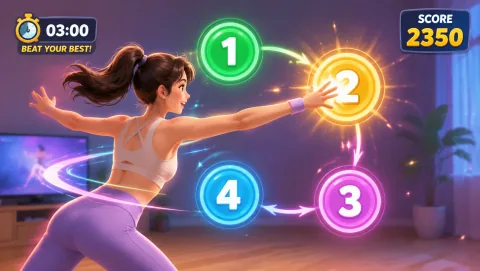
Use hand signals, reaching, rhythm, or visual cues that can be done seated or standing.
Walking groups with route choices
Offer a short flat route, a longer route, and an indoor option. Do not make the longest distance the only “real” version.
Workplace movement should fit inside work rather than pretending the office has become a gym. Keep the instructions brief, the movement ordinary, and the option to sit out completely normal. Participation is a better success measure here than intensity.
Mixed-skill mini tournament
Combine trivia, drawing, reaction, puzzle, and target challenges. Different skills prevent fitness from determining the winner.
For teams, a good energizer is deliberately modest. Keep the instructions brief, the movement ordinary, and the option to sit out completely normal. Participation is a better success measure here than intensity.
Optional motion game station:
Use an active browser or console game as one station. Include seated or observer roles and avoid publishing individual scores unless participants choose to share them.
Creative build challenge:
Teams solve a design problem using paper, blocks, or common materials. It creates movement around the room without making physical ability the task.
Rhythm activity with seated options:
Clapping, upper-body movement, tapping, and simple step patterns can all share the same beat.
Ask about access needs before the event:
Do not put employees in the position of explaining limitations publicly in front of colleagues. Provide the activity description and alternatives in advance.
Avoid wellness language that ranks bodies
“Burn the most calories” and “lose the most weight” are poor inclusive workplace goals.
The best mixed-ability activity creates several legitimate ways to participate. Nobody should have to choose between disclosing a limitation and sitting out visibly.
The social design matters as much as the movement itself. Keep the instructions brief, the movement ordinary, and the option to sit out completely normal. Participation is a better success measure here than intensity.
Keep the social pressure lower than the benefit
Best fit: this is useful when people can join for a short reset, understand the invitation immediately, and leave without having to explain why they are sitting out.
Limit: it is a poor choice when participation is treated as a performance, the activity competes with a serious meeting, or colleagues have very different comfort levels with cameras and movement.
If you are choosing: If you are choosing between ideas, prefer a short optional round with a personal target over a public leaderboard. The goal is an easier break, not another workplace metric.