A motion game should not be called wheelchair-friendly simply because the player can sit in front of the screen. The controls, target positions, timing, camera framing, and physical safety all matter.
The goal is meaningful participation, not identical movement. Observer, scorekeeper, and chooser roles should feel like normal ways to participate, not consolation prizes. When choices are visible from the start, the activity feels more natural for everyone.
Check whether the game requires lower-body movement
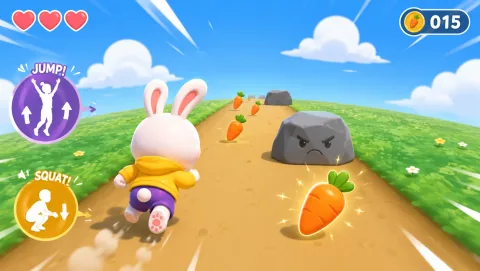
Avoid titles where jumping, stepping, squatting, or standing is required to progress. Look for hand, arm, upper-body, gaze, or other controls the player can use comfortably.
Accessibility is strongest when alternatives exist before anyone has to ask for them. Testing with the real chair, screen, lighting, and player reveals problems that a feature checklist easily misses. When choices are visible from the start, the activity feels more natural for everyone.
Difficulty can come from memory, choices, or timing instead of requiring a larger physical range.
A feature label does not tell you whether an activity is comfortable in the real room. Testing with the real chair, screen, lighting, and player reveals problems that a feature checklist easily misses. When choices are visible from the start, the activity feels more natural for everyone.
Test target reach
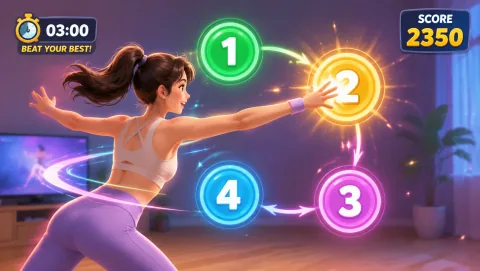
Targets should appear inside a practical range. A visually large target can still be inaccessible if it repeatedly appears too high, low, or far to one side.
Inclusive motion play is mostly a collection of practical design choices. Testing with the real chair, screen, lighting, and player reveals problems that a feature checklist easily misses. When choices are visible from the start, the activity feels more natural for everyone.
Check camera framing in the actual chair setup
Wheelchair height, armrests, desk position, and camera angle can change what the tracker sees. Test from the real position rather than assuming a standing configuration will translate.
The player's actual position is the right place to evaluate the experience. Testing with the real chair, screen, lighting, and player reveals problems that a feature checklist easily misses. When choices are visible from the start, the activity feels more natural for everyone.
Avoid time pressure as the only difficulty:
Sequence, memory, accuracy, and decision-making can create challenge without requiring rapid or large-range movement.
Make the environment safe:
Clear space around the chair, lock brakes where appropriate, and avoid asking the player to reach in a way that affects stability.
Verify the product, not the marketing category
If a developer has not tested the specific game with wheelchair users, describe it cautiously as “may support seated upper-body play” rather than claiming accessibility.
Wheelchair-friendly design comes from control flexibility and real testing—not from adding a seated icon after the game is finished.
The goal is meaningful participation, not identical movement. Testing with the real chair, screen, lighting, and player reveals problems that a feature checklist easily misses. When choices are visible from the start, the activity feels more natural for everyone.
Judge the format by the device and the room
Best fit: start here when the device is already available, the camera view is understandable, and the activity can be completed without moving furniture or sharing more video than necessary.
Limit: it is a weaker choice when the connection is unstable, the frame is crowded, the light makes tracking unreliable, or the player needs a movement the camera cannot read consistently.
If you are choosing: If you are choosing between a digital and an offline version, test the first cue before choosing the game. Use the offline option when it gives clearer feedback or a more comfortable way to participate.