You do not need a gym habit to build a movement habit. If you dislike gym environments, forcing yourself to buy another membership is not the only path to becoming more active.
For adults, the hardest part is often starting rather than knowing what movement is available. Feedback such as skill, mood, score, or simply less sitting can be more motivating in the moment than an estimated calorie number. Enjoyment is not a distraction from adherence; it is part of what makes adherence possible.
Choose the form before the target
Start by identifying movement you dislike least—or enjoy most:
- walking;
- dance;
- active games;
- swimming;
- casual sport;
- home strength work;
- cycling;
- hiking;
- skill practice.
A sustainable format matters before an ambitious schedule.
A sustainable active routine usually has a very low-friction version. Feedback such as skill, mood, score, or simply less sitting can be more motivating in the moment than an estimated calorie number. Enjoyment is not a distraction from adherence; it is part of what makes adherence possible.
It helps to judge movement by repeatability before ambition. Feedback such as skill, mood, score, or simply less sitting can be more motivating in the moment than an estimated calorie number. Enjoyment is not a distraction from adherence; it is part of what makes adherence possible.
Attach movement to an existing routine
Examples:
- walk after lunch;
- play a ten-minute active game after work;
- do mobility while coffee brews;
- take one recurring call standing;
- use Saturday morning for a longer outdoor activity.
The cue already exists, so the habit requires less remembering.
The useful question is what you would still do on a busy or low-energy day. Feedback such as skill, mood, score, or simply less sitting can be more motivating in the moment than an estimated calorie number. Enjoyment is not a distraction from adherence; it is part of what makes adherence possible.
Start smaller than your motivation suggests
On a high-motivation day, it is tempting to plan six sessions a week. A better starting point may be ten minutes three times a week plus more walking.
You can expand once the routine survives ordinary busy days.
Many adults need a smaller commitment, not a more sophisticated workout. Feedback such as skill, mood, score, or simply less sitting can be more motivating in the moment than an estimated calorie number. Enjoyment is not a distraction from adherence; it is part of what makes adherence possible.
Use fun as a legitimate design choice:
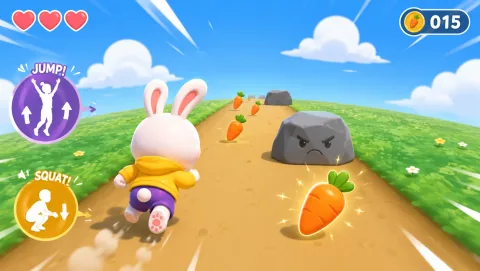
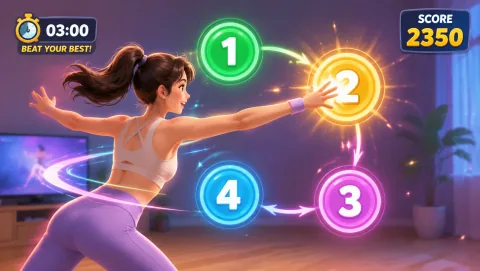
Exergaming research suggests enjoyment and lower perceived exertion can be relevant to adherence for some users. If games help you start, use them.
A browser motion game, dance title, VR session, or sport can be a valid component of an active routine.
Track behavior, not just outcomes
Instead of only weighing yourself or counting calories, track:
- days you moved;
- minutes active;
- walks taken;
- games played;
- skills improved;
- how often you interrupted long sitting periods.
Keep one minimum version
Define what you do on a bad day: five-minute walk, one song, three game rounds, or a short mobility sequence.
A habit becomes more resilient when it has a version that still fits low-energy days.
You do not have to become a gym person. Build a system around forms of movement you can realistically repeat.
For adults, the hardest part is often starting rather than knowing what movement is available. Leaving room for ten-minute days makes consistency easier and does not stop you from doing more when you have momentum. Enjoyment is not a distraction from adherence; it is part of what makes adherence possible.
Judge the format by the device and the room
Best fit: start here when the device is already available, the camera view is understandable, and the activity can be completed without moving furniture or sharing more video than necessary.
Limit: it is a weaker choice when the connection is unstable, the frame is crowded, the light makes tracking unreliable, or the player needs a movement the camera cannot read consistently.
If you are choosing: If you are choosing between a digital and an offline version, test the first cue before choosing the game. Use the offline option when it gives clearer feedback or a more comfortable way to participate.