Homeschool PE can be broad and useful without a treadmill, home gym, sports court, or collection of specialized gear. The priorities are movement variety, skill practice, regular participation, and activities the family can actually sustain.
Teachers benefit more from reliable formats than from endless novelty. Movement should support the teaching goal or the reset the teacher actually needs, not exist just because technology makes it possible. If another teacher can run it tomorrow from a short note, the format is probably strong.
Reliable formats to keep in rotation
Walking, hiking, and outdoor exploration
These are some of the lowest-cost options. Add hills, intervals, route planning, or observation challenges as children get older.
Decide in advance what happens when attendance is twice what you expected.
Running and basic conditioning
Use short runs, shuttle patterns in a safe outdoor space, bodyweight movements, or simple circuits.
Adjust for age and ability rather than copying adult fitness plans.
A quiet alternative is worth keeping beside every high-energy option.
Ball skills with one inexpensive ball
A single ball can support throwing, catching, dribbling, kicking, target accuracy, and partner games.
Reuse the format with a new theme before inventing an entirely new activity.
Balance and coordination
Use floor lines, one-foot balance, slow movement, hop patterns, or improvised agility routes.
If the activity depends on one specific device or room, document a fallback at the same time.
Dance and rhythm
Music provides structure without equipment. Use freestyle, follow-along routines, or student-created sequences.
Write the setup in a few lines so another adult can run it without needing a verbal handover.
No-equipment games
Reaction calls, mirror movement, animal walks, movement memory, and body-shape challenges work indoors or outside.
Browser motion games
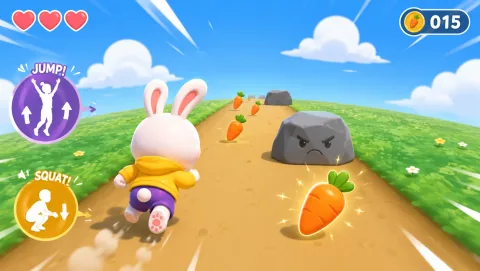
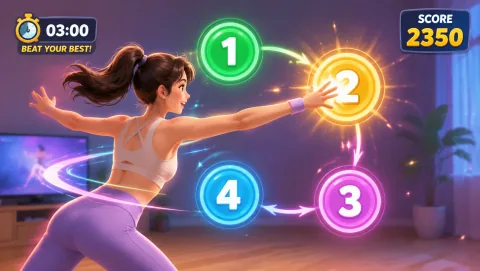
If you already own a laptop or tablet with a camera, a webcam game can add digital variety without purchasing a console. MovePlay uses body or hand tracking in the browser; some games require more space than others.
It should be one option, not the entire PE program.
Community resources
Libraries, recreation centers, public courts, parks, low-cost swim sessions, and community sports can expand what is possible without buying equipment for home.
Build a weekly mix
A balanced low-cost week could include:
- outdoor endurance or walking;
- ball or skill practice;
- strength and mobility;
- a game or family activity;
- free active play.
The best homeschool PE plan is not the one with the most equipment. It is the one children can repeat across the year without the family’s schedule or budget collapsing under it.
What makes it repeatable
A classroom game earns its place when it fits the room, the clock, and the lesson. Movement should support the teaching goal or the reset the teacher actually needs, not exist just because technology makes it possible. If another teacher can run it tomorrow from a short note, the format is probably strong.
One thing I would not ignore
For school use, I would always think about the ending before starting the activity. Movement should support the teaching goal or the reset the teacher actually needs, not exist just because technology makes it possible. If another teacher can run it tomorrow from a short note, the format is probably strong.
Build a small activity library:
The strongest program idea is the one staff can run safely, repeatedly, and with less stress when the day changes.
Make the activity work in the real timetable
Best fit: use this when the teacher can explain one visible rule, keep the first turn brief, and give students a clear way to watch, lead, or pause without being singled out.
Limit: it is a poor fit when setup takes longer than the learning goal, the room cannot be reset safely, or the scoring rewards speed over control. A lower-tech version may teach the same idea better.
If you are choosing: If you are choosing between formats, begin with the option that needs the fewest materials and the least movement across the room. Test one round before committing the whole class.