Longer booth dwell time is useful only if the extra time creates a better visitor experience or a better conversation. A game that traps someone for five minutes without relevance is not automatically successful.
Staff time and reset time are part of product quality in a live environment. A two-minute experience with a fast reset may outperform a deeper game that serves only a handful of people per hour. Operational clarity is what lets a good idea scale beyond one enthusiastic facilitator.
Use progressive rounds
Start with a 20-second challenge, then offer an optional harder second round. Visitors choose whether to stay.
Public and commercial activities have to survive operational reality. Staff need a short instruction card covering setup, goal, safety, reset, and what to do when the technology fails. Operational clarity is what lets a good idea scale beyond one enthusiastic facilitator.
At a booth or venue, the game is only one part of the experience. Staff need a short instruction card covering setup, goal, safety, reset, and what to do when the technology fails. Operational clarity is what lets a good idea scale beyond one enthusiastic facilitator.
Add visible personal bests
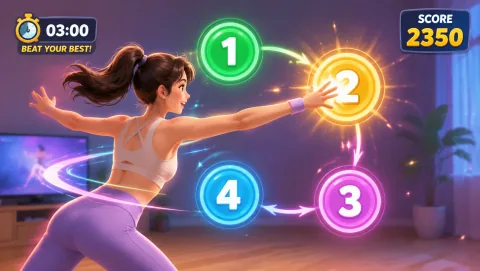
A score gives people a reason to retry without requiring a prize.
A successful activity creates a queue, which means the queue has to be designed too. Staff need a short instruction card covering setup, goal, safety, reset, and what to do when the technology fails. Operational clarity is what lets a good idea scale beyond one enthusiastic facilitator.
B2B use changes the definition of a good game. Staff need a short instruction card covering setup, goal, safety, reset, and what to do when the technology fails. Operational clarity is what lets a good idea scale beyond one enthusiastic facilitator.
Use team competition
Colleagues can compare results or contribute to a company score, encouraging a small group to remain near the booth.
Staff time and reset time are part of product quality in a live environment. Staff need a short instruction card covering setup, goal, safety, reset, and what to do when the technology fails. Operational clarity is what lets a good idea scale beyond one enthusiastic facilitator.
Connect the challenge to the product story
If the company sells speed, accuracy, coordination, logistics, or decision software, the game mechanic can reflect that concept without turning into a product exam.
Public and commercial activities have to survive operational reality. The activity should still work after the original designer leaves and a different staff member takes over. Operational clarity is what lets a good idea scale beyond one enthusiastic facilitator.
Create a natural handoff to staff:
The end screen can suggest a demo, show one useful message, or invite a conversation. Keep the handoff human.
Measure quality, not only duration:
Track whether longer dwell time leads to more conversations, qualified leads, demos, or return visits.
Avoid queue damage
If the booth is busy, shorten rounds automatically. Dwell time should not become congestion.
The objective is meaningful attention. A shorter game that starts a good conversation may outperform a longer one that merely occupies the visitor.
At a booth or venue, the game is only one part of the experience. The activity should still work after the original designer leaves and a different staff member takes over. Operational clarity is what lets a good idea scale beyond one enthusiastic facilitator.
Keep the social pressure lower than the benefit
Best fit: this is useful when people can join for a short reset, understand the invitation immediately, and leave without having to explain why they are sitting out.
Limit: it is a poor choice when participation is treated as a performance, the activity competes with a serious meeting, or colleagues have very different comfort levels with cameras and movement.
If you are choosing: If you are choosing between ideas, prefer a short optional round with a personal target over a public leaderboard. The goal is an easier break, not another workplace metric.