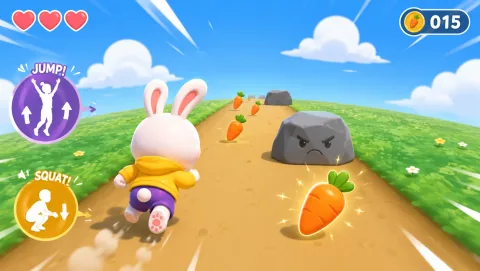
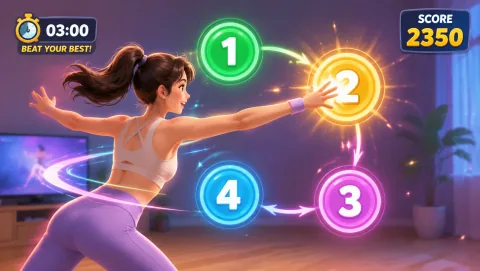
Games can add movement to a day by giving physical actions an immediate objective. You are not simply “doing activity”; you are trying to hit something, match a beat, beat a time, or complete a challenge.
A sustainable active routine usually has a very low-friction version. The format should reduce the friction around movement instead of adding new equipment, guilt, or preparation. That is a more useful foundation for a habit than chasing perfect sessions.
Use a five-minute reaction break
Set up visual targets or play a short digital reaction game. Use it between desk tasks when a full workout is unrealistic.
It helps to judge movement by repeatability before ambition. The format should reduce the friction around movement instead of adding new equipment, guilt, or preparation. That is a more useful foundation for a habit than chasing perfect sessions.
The useful question is what you would still do on a busy or low-energy day. The format should reduce the friction around movement instead of adding new equipment, guilt, or preparation. That is a more useful foundation for a habit than chasing perfect sessions.
Turn walking into a mission
Use geocaching, photo challenges, map exploration, or a destination. The walk becomes the method for completing something else.
Many adults need a smaller commitment, not a more sophisticated workout. The format should reduce the friction around movement instead of adding new equipment, guilt, or preparation. That is a more useful foundation for a habit than chasing perfect sessions.
Use active console or VR games:
Rhythm, sports, and boxing games can create longer active sessions for people who already own the hardware.
Try webcam motion games
A laptop camera can support body-controlled games without a separate controller. MovePlay uses browser-based tracking for reaching, squatting, swiping, posing, and other actions.
Choose the game by movement level and room size rather than by theme alone.
For adults, the hardest part is often starting rather than knowing what movement is available. Short walks, a few active game rounds, music, mobility work, or a simple skill can all fit without turning the day into a training plan. The aim is to make movement easier to return to.
Create a personal movement leaderboard:
Track reaction score, balance time, jump-rope streak, number of walks, or another skill metric. Compete against your previous week rather than a stranger’s fitness numbers.
Add social challenges:
Run a family tournament, office challenge, or friend-versus-friend score. Keep it voluntary and choose activities that allow different effort levels.
Turn chores into timed games:
Use a ten-minute tidy sprint, step-count cleaning challenge, or “one song per room.” It is still a chore, but a time boundary can make it easier to start.
Do not confuse game points with health outcomes
A high score tells you how well you played the game. It does not directly measure fitness, calorie expenditure, or weight loss.
Use game mechanics for motivation and feedback while keeping health claims realistic.
A sustainable active routine usually has a very low-friction version. Short walks, a few active game rounds, music, mobility work, or a simple skill can all fit without turning the day into a training plan. The aim is to make movement easier to return to.
Keep the social pressure lower than the benefit
Best fit: this is useful when people can join for a short reset, understand the invitation immediately, and leave without having to explain why they are sitting out.
Limit: it is a poor choice when participation is treated as a performance, the activity competes with a serious meeting, or colleagues have very different comfort levels with cameras and movement.
If you are choosing: If you are choosing between ideas, prefer a short optional round with a personal target over a public leaderboard. The goal is an easier break, not another workplace metric.