If you are trying to manage your weight, exercise does not have to mean choosing the most punishing activity you can tolerate. The more useful question is often: what kinds of movement can you repeat consistently alongside the rest of your plan?
Weight change depends on many factors, including food intake, sleep, medication, health conditions, and overall activity. The ideas below focus only on making movement easier to do regularly.
A sustainable active routine usually has a very low-friction version. Leaving room for ten-minute days makes consistency easier and does not stop you from doing more when you have momentum. Enjoyment is not a distraction from adherence; it is part of what makes adherence possible.
Walk with a reason
Walk to get coffee, take a call, pick up groceries, listen to a podcast, or explore a new route. A destination often makes walking easier to start than an abstract step target.
It helps to judge movement by repeatability before ambition. Leaving room for ten-minute days makes consistency easier and does not stop you from doing more when you have momentum. Enjoyment is not a distraction from adherence; it is part of what makes adherence possible.
The useful question is what you would still do on a busy or low-energy day. Leaving room for ten-minute days makes consistency easier and does not stop you from doing more when you have momentum. Enjoyment is not a distraction from adherence; it is part of what makes adherence possible.
Use active games
If games hold your attention better than workout videos, use that.
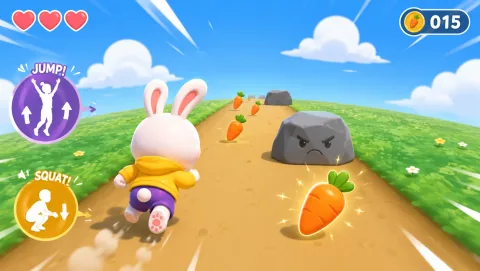
Dance games, VR rhythm games, console sports, and webcam motion games can all add activity. MovePlay is a browser-based example where reaching, squatting, swiping, or dodging controls the game. Intensity varies widely by title, so treat the game as activity—not as a guaranteed calorie burn.
Many adults need a smaller commitment, not a more sophisticated workout. Leaving room for ten-minute days makes consistency easier and does not stop you from doing more when you have momentum. Enjoyment is not a distraction from adherence; it is part of what makes adherence possible.
Try short intervals
You do not need one long block every time. Ten minutes of brisk walking, a few game rounds, or a short movement circuit can fit days when a longer session does not.
Public-health guidance recognizes that physical activity accumulated in bouts of any length can contribute to overall activity.
For adults, the hardest part is often starting rather than knowing what movement is available. The format should reduce the friction around movement instead of adding new equipment, guilt, or preparation. Enjoyment is not a distraction from adherence; it is part of what makes adherence possible.
Choose skills you want to improve:
Juggling, jump rope, dance steps, badminton, swimming, climbing, and ball skills give you a reason to return beyond weight loss.
That matters because a scale is slow feedback. Skill improvement can be immediate.
Make social movement easier:
Walk with a friend, join a beginner class, play with children, or schedule a weekly casual sport. Social plans can remove some of the decision-making that causes solo activity to be postponed.
Keep low-energy options:
A sustainable routine needs a version for tired days: a five-minute walk, mobility session, one song, or a few light game rounds.
Do not use consumer calorie numbers as a promise
Wearables, games, and calculators can estimate energy expenditure, but estimates are not precise enough to tell you exactly how much weight an individual will lose.
Use them, if at all, as rough feedback. A better question is whether the activity is helping you build a more active routine you can keep.
A sustainable active routine usually has a very low-friction version. The format should reduce the friction around movement instead of adding new equipment, guilt, or preparation. Enjoyment is not a distraction from adherence; it is part of what makes adherence possible.
Choose it for the group in front of you
Best fit: this works when the ages and confidence levels can share one simple goal, with an adult able to explain the first round and step in if the room loses focus.
Limit: it is a weaker choice when children are tired, the ages are far apart, or one person is expected to perform in front of everyone. A quieter role or a shorter round may be the better answer.
If you are choosing: start with the smallest version that can succeed in the available space. Add speed, scoring, or competition only after the group understands the basic action.