If movement only appears on your schedule as “exercise,” it is easy to skip on busy days. A more practical approach is to add enjoyable movement to activities you already do.
It helps to judge movement by repeatability before ambition. The format should reduce the friction around movement instead of adding new equipment, guilt, or preparation. That is a more useful foundation for a habit than chasing perfect sessions.
Low-friction ways to move
Turn music into a cue
Use one song as a movement break. Dance, walk, stretch, or clean until it ends.
Attach it to a natural break in the day so you do not need a second decision about when to begin.
Play something
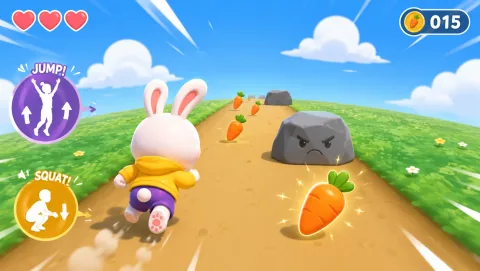
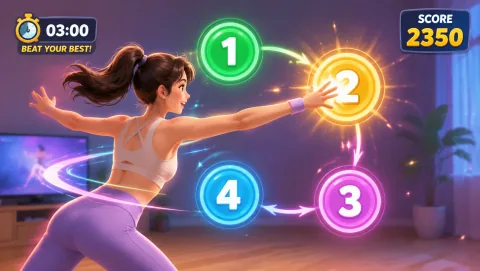
Active games can make a short movement session feel less repetitive. Options include rhythm games, VR, console motion games, reaction apps, and webcam games.
The useful feature is feedback: you move because something in the game requires it.
If the format is enjoyable, resist the urge to optimize it immediately into a complicated program.
Walk while thinking
Take low-focus calls on foot. Walk while brainstorming. Record voice notes outside. If a task does not require a keyboard, it may not require a chair either.
Use effort that feels appropriate today; tomorrow's repeat matters more than today's heroic session.
Learn a physical skill
Try dance steps, juggling, ball control, balance, jump rope, or simple martial-arts footwork. Skill practice gives movement a reason beyond calorie burning.
A score or streak can be motivating, but it should not make you ignore discomfort or poor movement quality.
Add social movement
Walk with a friend, play with children, join a casual sport, or run a family challenge. Conversation can make activity feel easier to repeat.
The useful question is what you would still do on a busy or low-energy day. The format should reduce the friction around movement instead of adding new equipment, guilt, or preparation. That is a more useful foundation for a habit than chasing perfect sessions.
How to make it repeatable:
Many adults need a smaller commitment, not a more sophisticated workout. The format should reduce the friction around movement instead of adding new equipment, guilt, or preparation. That is a more useful foundation for a habit than chasing perfect sessions.
Make household tasks faster:
Use a ten-minute timer for cleaning, tidying, or putting things away. The goal is not to pretend chores are a workout; it is to stop treating useful movement as if it “doesn’t count.”
Use short game breaks at home
A few rounds of an active browser game can fit between desk tasks. MovePlay is one option when you want a camera-based game without a console; choose lower-impact titles if you are in a shared space.
For adults, the hardest part is often starting rather than knowing what movement is available. Short walks, a few active game rounds, music, mobility work, or a simple skill can all fit without turning the day into a training plan. The aim is to make movement easier to return to.
Count frequency before intensity
If your current day is mostly sedentary, moving more often may be the first useful target. WHO guidance emphasizes that any activity is better than none and all physical activity counts.
Fun is not a trivial feature. If an activity is easier to enjoy, it is also easier to choose again tomorrow.
One thing I would not ignore:
A sustainable active routine usually has a very low-friction version. Short walks, a few active game rounds, music, mobility work, or a simple skill can all fit without turning the day into a training plan. The aim is to make movement easier to return to.
Short and repeatable wins:
It helps to judge movement by repeatability before ambition. Short walks, a few active game rounds, music, mobility work, or a simple skill can all fit without turning the day into a training plan. The aim is to make movement easier to return to.
Choose it for the group in front of you
Best fit: this works when the ages and confidence levels can share one simple goal, with an adult able to explain the first round and step in if the room loses focus.
Limit: it is a weaker choice when children are tired, the ages are far apart, or one person is expected to perform in front of everyone. A quieter role or a shorter round may be the better answer.
If you are choosing: start with the smallest version that can succeed in the available space. Add speed, scoring, or competition only after the group understands the basic action.