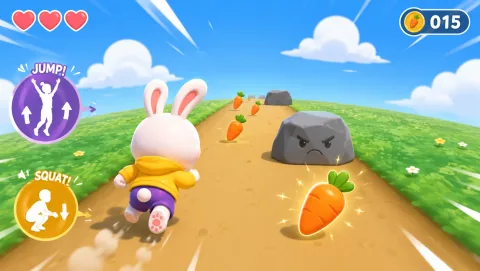
Five minutes is enough time for a movement break if the game starts immediately. The rule should take less than 30 seconds to explain, and the stopping point should be obvious.
Use these between homework tasks, before dinner, during a classroom transition, or whenever a child has been sitting too long.
The practical test is what happens after the first burst of excitement. If the child needs constant correction or adult help, the activity is less independent than it looked on the list. The goal is a reliable option the family can actually reuse.
Games I would try first
1. High-Low-Left-Right
Call one direction every few seconds. The child reaches high, squats low, or steps/reaches left and right. Add “freeze” as a fifth command.
With children, the room and the timing matter as much as the idea itself. If the child needs constant correction or adult help, the activity is less independent than it looked on the list. The goal is a reliable option the family can actually reuse.
2. Copy Four
Perform four movements in sequence. The child copies them. Add one movement each round until time runs out.
A parent usually needs something that works under ordinary conditions, not a perfect activity day. If the child needs constant correction or adult help, the activity is less independent than it looked on the list. The goal is a reliable option the family can actually reuse.
3. Balloon Keep-Up
Keep a balloon off the floor for five minutes. Add alternating-hand or no-feet-outside-the-zone rules if it is too easy.
In a real home, the deciding factor is often not how creative an activity sounds but how quickly a child can understand it. A five-minute game that starts cleanly can be more useful than a complicated project that consumes the whole afternoon. The goal is a reliable option the family can actually reuse.
4. Animal Minute
Choose five animals and spend one minute moving like each. Use controlled versions indoors rather than racing.
For family use, I would put ease of starting ahead of novelty. A five-minute game that starts cleanly can be more useful than a complicated project that consumes the whole afternoon. The goal is a reliable option the family can actually reuse.
5. Target Reach
Point to imaginary or real targets around the room. The child reaches or steps to them in the order called.
The practical test is what happens after the first burst of excitement. A five-minute game that starts cleanly can be more useful than a complicated project that consumes the whole afternoon. The goal is a reliable option the family can actually reuse.
6. Five-Minute Webcam Challenge
Play two or three short rounds of a movement-controlled game. Reaction or Whack A Mole work well because the goal is simple and rounds are short. If the child is already set up, the game can fit inside a five-minute break; if camera setup is unfamiliar, choose a non-screen option instead.
With children, the room and the timing matter as much as the idea itself. A five-minute game that starts cleanly can be more useful than a complicated project that consumes the whole afternoon. The goal is a reliable option the family can actually reuse.
7. Freeze Dance
One or two songs are enough. Stop the music several times and hold each freeze for three seconds.
A parent usually needs something that works under ordinary conditions, not a perfect activity day. A five-minute game that starts cleanly can be more useful than a complicated project that consumes the whole afternoon. The goal is a reliable option the family can actually reuse.
8. Balance Switch
Alternate 20 seconds of balance with 20 seconds of marching or reaching. Switch sides each round.
In a real home, the deciding factor is often not how creative an activity sounds but how quickly a child can understand it. The best choice changes with energy: restless children need an outlet; tired children may need structure and calm instead. The goal is a reliable option the family can actually reuse.
9. Sock Toss Sprint
Place a basket nearby. Toss five rolled socks, retrieve them, and repeat from a new distance.
10. Beat the Adult
Choose one simple challenge—most target hits, longest balance, or fastest movement sequence—and let the child compete against an adult or their own previous score.
Keep the first round short. If the child immediately asks to do it again, repeat before adding more rules.
How I would choose:
For family use, I would put ease of starting ahead of novelty. The best choice changes with energy: restless children need an outlet; tired children may need structure and calm instead. The goal is a reliable option the family can actually reuse.
End on time
The value of a five-minute game is partly that adults and children trust the limit. If “five minutes” regularly turns into 20, it becomes harder to use the activity before homework, schoolwork, or bedtime.
Keep the game short enough that it remains easy to say yes to next time.
One thing I would not ignore:
The practical test is what happens after the first burst of excitement. The best choice changes with energy: restless children need an outlet; tired children may need structure and calm instead. The goal is a reliable option the family can actually reuse.
When it is worth repeating:
The aim is not to manufacture exhaustion. Give the energy a job, then make the next transition easier.
Make the activity work in the real timetable
Best fit: use this when the teacher can explain one visible rule, keep the first turn brief, and give students a clear way to watch, lead, or pause without being singled out.
Limit: it is a poor fit when setup takes longer than the learning goal, the room cannot be reset safely, or the scoring rewards speed over control. A lower-tech version may teach the same idea better.
If you are choosing: If you are choosing between formats, begin with the option that needs the fewest materials and the least movement across the room. Test one round before committing the whole class.