If you hate exercise, the problem may not be movement itself. You may hate gyms, repetitive sets, long workouts, competitive sport, being watched, or the feeling that every session is a test of discipline.
That distinction matters because you have more options than “learn to love the treadmill.”
A sustainable active routine usually has a very low-friction version. The format should reduce the friction around movement instead of adding new equipment, guilt, or preparation. The aim is to make movement easier to return to.
Try games instead of sets
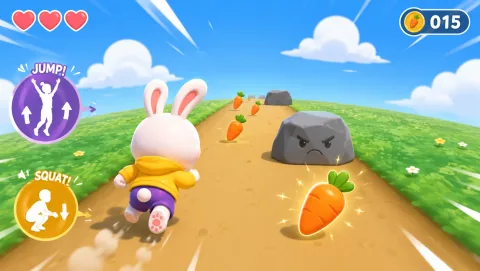
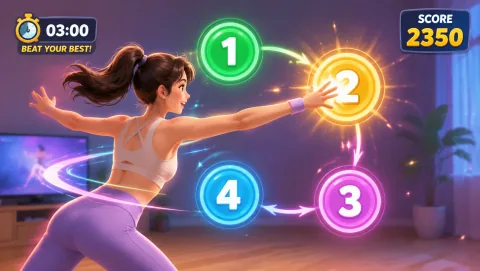
Exergames combine physical movement with game objectives. A systematic review of young-adult exergaming research found that some exergames can reach moderate-to-vigorous intensity and may support enjoyment partly by lowering perceived exertion and distracting attention from exercise itself.
That does not mean every game is a workout. It means game structure can make movement feel different.
Options include:
- dance games;
- VR rhythm or boxing games;
- motion-console sports;
- webcam games such as MovePlay;
- active mobile games;
- real-world skill games.
Remove the parts you dislike
If you hate sweating heavily, choose lower intensity. If you hate repetition, use games or sports. If you hate gyms, stay home or go outside. If you hate exercising alone, make it social.
If the format is enjoyable, resist the urge to optimize it immediately into a complicated program.
Do not chase the perfect program first
Consistency with an imperfect activity you tolerate is usually more useful than a theoretically excellent plan you avoid.
You do not need to become a person who loves exercise as an identity. You need to find forms of movement you are willing to choose often enough that being active stops feeling like a recurring argument with yourself.
A score or streak can be motivating, but it should not make you ignore discomfort or poor movement quality.
How to make it repeatable:
It helps to judge movement by repeatability before ambition. The format should reduce the friction around movement instead of adding new equipment, guilt, or preparation. The aim is to make movement easier to return to.
Start with activities that have another purpose
Walk somewhere you actually need to go. Play a sport casually. Dance because you like the music. Clean with a timer. Hike for the view. Play a game where movement is the controller.
The activity still counts as movement even when fitness is not the main reason you chose it.
Use shorter sessions:
If 45 minutes feels impossible, start with five or ten. Public-health guidance recognizes activity accumulated in bouts of any length.
Short sessions are not a failure to do a “proper” workout.
One thing I would not ignore:
The useful question is what you would still do on a busy or low-energy day. The format should reduce the friction around movement instead of adding new equipment, guilt, or preparation. The aim is to make movement easier to return to.
Reduce the friction first:
Many adults need a smaller commitment, not a more sophisticated workout. The format should reduce the friction around movement instead of adding new equipment, guilt, or preparation. The aim is to make movement easier to return to.
Judge the format by the device and the room
Best fit: start here when the device is already available, the camera view is understandable, and the activity can be completed without moving furniture or sharing more video than necessary.
Limit: it is a weaker choice when the connection is unstable, the frame is crowded, the light makes tracking unreliable, or the player needs a movement the camera cannot read consistently.
If you are choosing: If you are choosing between a digital and an offline version, test the first cue before choosing the game. Use the offline option when it gives clearer feedback or a more comfortable way to participate.