Movement can lower the speaking burden in an ESL classroom because students can respond before they have the full sentence ready. It also makes vocabulary, directions, and action verbs easier to demonstrate.
In a classroom, an activity has to work for the teacher as well as the students. A final freeze, countdown, seated cue, or retrieval question can make a two-minute break genuinely useful instead of creating five minutes of recovery. A small amount of structure makes the activity much easier to reuse.
Activities to use in the lesson
Total-response commands
Use simple instructions such as:
- stand up;
- sit down;
- turn left;
- point to the door;
- touch your shoulder;
- take two steps;
- freeze.
Increase complexity as students become comfortable.
Keep the physical rule simple enough that working memory stays available for the subject itself.
Find and point
Say an object, color, shape, or classroom word. Students point to or safely approach an example.
Accuracy in the content should matter more than speed of movement.
Preposition game
Use students or simple classroom objects to demonstrate in, on, under, next to, behind, and between.
Use this for review or retrieval before using it for brand-new material that already demands a lot of attention.
Action charades
Students act out verbs or short phrases while classmates guess in English.
If students remember the action but not the concept, simplify the movement and strengthen the prompt.
Rhythm sentence practice
Add a clap or step pattern to short sentence frames. Rhythm can make repeated speaking feel less mechanical.
Rhythm already contains timing and repetition, so the body has a natural role. Keep the musical task central; the goal is not to disguise a workout as music class.
Movement story
Tell a simple story containing repeated actions. Students perform the action whenever they hear the target phrase.
Digital movement station
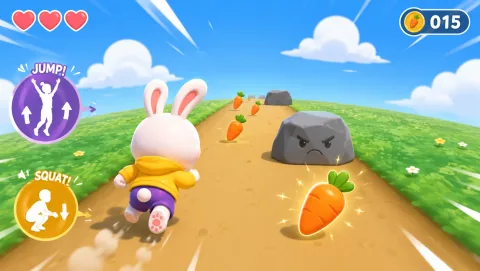
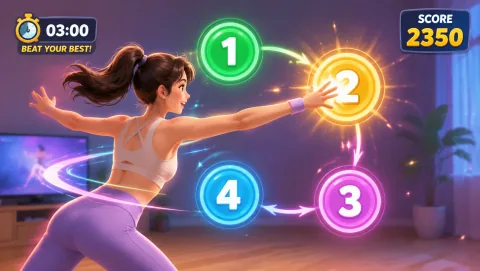
A projected or webcam-based game can create visual response tasks, but language should remain central. Use the screen to prompt “left/right,” colors, numbers, or verbs rather than letting the game become unrelated free play.
How to keep the learning central
The most important classroom detail is often the transition nobody puts in the title. A final freeze, countdown, seated cue, or retrieval question can make a two-minute break genuinely useful instead of creating five minutes of recovery. A small amount of structure makes the activity much easier to reuse.
Vocabulary action match
Assign gestures to new words, especially verbs, emotions, positions, weather, and everyday actions.
Keep gestures consistent across lessons so they become memory cues.
Teachers benefit more from reliable formats than from endless novelty. A final freeze, countdown, seated cue, or retrieval question can make a two-minute break genuinely useful instead of creating five minutes of recovery. A small amount of structure makes the activity much easier to reuse.
Listen and choose:
Display two to four pictures or words. Read a description and ask students to point, step, or reach toward the correct option.
Keep language safe to attempt:
Movement games work well when students can participate even if their spoken English is still developing. Do not turn every mistake into public correction.
Use the physical response to build confidence, then move toward fuller speaking, reading, and writing.
One thing I would not ignore
A classroom game earns its place when it fits the room, the clock, and the lesson. A final freeze, countdown, seated cue, or retrieval question can make a two-minute break genuinely useful instead of creating five minutes of recovery. A small amount of structure makes the activity much easier to reuse.
Use movement to clarify
For school use, I would always think about the ending before starting the activity. A final freeze, countdown, seated cue, or retrieval question can make a two-minute break genuinely useful instead of creating five minutes of recovery. A small amount of structure makes the activity much easier to reuse.
Make the activity work in the real timetable
Best fit: use this when the teacher can explain one visible rule, keep the first turn brief, and give students a clear way to watch, lead, or pause without being singled out.
Limit: it is a poor fit when setup takes longer than the learning goal, the room cannot be reset safely, or the scoring rewards speed over control. A lower-tech version may teach the same idea better.
If you are choosing: If you are choosing between formats, begin with the option that needs the fewest materials and the least movement across the room. Test one round before committing the whole class.