Moving more at home does not require a formal workout plan. If your main problem is sitting for long stretches, the easiest approach is to add short periods of movement to parts of the day that already exist.
For adults, the hardest part is often starting rather than knowing what movement is available. Short walks, a few active game rounds, music, mobility work, or a simple skill can all fit without turning the day into a training plan. That is a more useful foundation for a habit than chasing perfect sessions.
Walk while doing low-focus tasks
Take phone calls standing or walking. Pace during voice notes. Walk around the room while listening to a podcast or thinking through a problem.
A sustainable active routine usually has a very low-friction version. Short walks, a few active game rounds, music, mobility work, or a simple skill can all fit without turning the day into a training plan. That is a more useful foundation for a habit than chasing perfect sessions.
Put movement into entertainment
If you like games, use a movement game rather than asking yourself to enjoy an exercise video you already dislike.
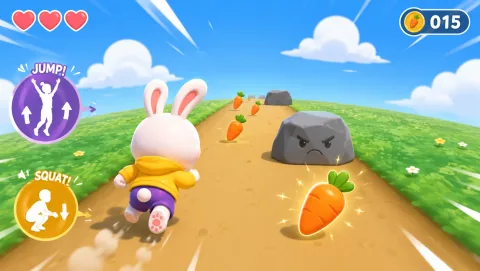
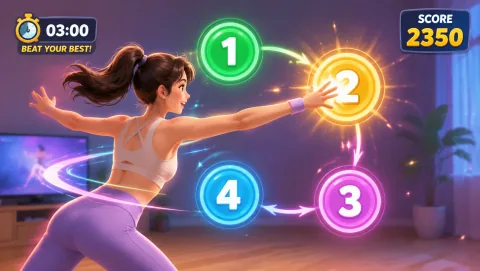
Browser games such as MovePlay can turn reaching, squatting, swiping, or dodging into game controls. For a short break, pick a game that starts quickly and does not require changing clothes or setting up equipment.
If the format is enjoyable, resist the urge to optimize it immediately into a complicated program.
Increase gradually
WHO guidance emphasizes that some physical activity is better than none and that all physical activity counts. If you are currently inactive, adding regular short bouts is a reasonable place to start before worrying about an ideal routine.
The useful target is not to make every hour productive. It is to make long periods of inactivity a little less automatic.
A score or streak can be motivating, but it should not make you ignore discomfort or poor movement quality.
How to make it repeatable
It helps to judge movement by repeatability before ambition. Short walks, a few active game rounds, music, mobility work, or a simple skill can all fit without turning the day into a training plan. That is a more useful foundation for a habit than chasing perfect sessions.
Use transitions:
Stand up and move when something changes: after a meeting, before lunch, when a kettle boils, after an episode, or between work tasks.
A transition is easier to remember than an arbitrary alarm because it is attached to something you already do.
Use five-minute blocks
Try one of these:
- brisk walking around the home;
- marching with arm swings;
- a few rounds of squats and reaches;
- mobility work;
- dance to one song;
- a short reaction game.
Five minutes is easier to fit than “I need to exercise for an hour.”
Make the environment help
Keep resistance bands, a mat, or walking shoes visible if you use them. Put a water bottle away from your desk. Stand for one recurring meeting. Store the remote somewhere that requires getting up.
Tiny environmental changes are not a fitness program, but they reduce the number of moments where convenience wins automatically.
One thing I would not ignore
The useful question is what you would still do on a busy or low-energy day. Short walks, a few active game rounds, music, mobility work, or a simple skill can all fit without turning the day into a training plan. That is a more useful foundation for a habit than chasing perfect sessions.
Make movement easier to repeat
Many adults need a smaller commitment, not a more sophisticated workout. Short walks, a few active game rounds, music, mobility work, or a simple skill can all fit without turning the day into a training plan. That is a more useful foundation for a habit than chasing perfect sessions.
Keep the social pressure lower than the benefit
Best fit: this is useful when people can join for a short reset, understand the invitation immediately, and leave without having to explain why they are sitting out.
Limit: it is a poor choice when participation is treated as a performance, the activity competes with a serious meeting, or colleagues have very different comfort levels with cameras and movement.
If you are choosing: If you are choosing between ideas, prefer a short optional round with a personal target over a public leaderboard. The goal is an easier break, not another workplace metric.