Easy movement games can add variety to an older adult’s day without requiring a gym or complicated equipment. The right level depends on mobility, balance, health conditions, and personal preference.
Activities for older adults should begin with the person, not the age label. Music, accuracy, memory, teamwork, and prediction can create plenty of game value without relying on fast footwork. That flexibility is what makes a format usable across very different days and participants.
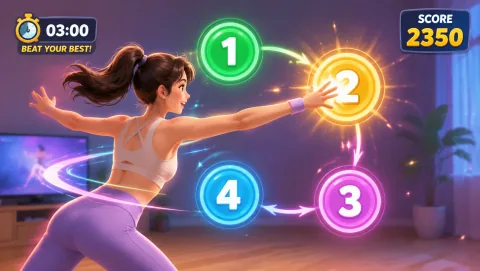
Seated reach game
Place or point to targets at comfortable heights and directions. Reach with one or both hands while keeping the movement controlled.
Simple rules do not require childish presentation. Music, accuracy, memory, teamwork, and prediction can create plenty of game value without relying on fast footwork. That flexibility is what makes a format usable across very different days and participants.
Mixed ability is normal in older-adult groups, not an edge case. Music, accuracy, memory, teamwork, and prediction can create plenty of game value without relying on fast footwork. That flexibility is what makes a format usable across very different days and participants.
Balloon tap:
Tap a balloon back and forth with a partner or keep it in the air while seated. Use plenty of clear space around chairs.
Short rounds make rest easier and reduce the social pressure to continue when someone is tired.
Mirror movement:
One person leads slow arm, shoulder, and torso movements; the other copies. Switch leaders after a minute.
Rhythm taps
Follow a simple clap, tap, or hand pattern. Add one beat at a time.
A good activity can stay challenging while becoming easier to access physically. Music, accuracy, memory, teamwork, and prediction can create plenty of game value without relying on fast footwork. That flexibility is what makes a format usable across very different days and participants.
Target point:
Call colors, numbers, or directions and ask the player to point or reach toward the matching target.
Step-and-touch:
For people comfortable standing, use small side steps, toe taps, or weight shifts near a stable support.
Simple motion games:
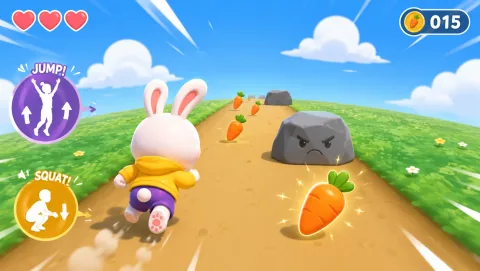
A screen-based game can add immediate feedback. If using a webcam platform such as MovePlay, start with hand, reach, or simple reaction games. Avoid assuming that a title involving squats, jumps, or fast lateral movement is suitable for every older adult.
Make the activity adjustable
Offer seated and standing versions. Reduce reach distance. Slow the cues. Make the target larger. Use a partner instead of a timer.
WHO guidance for older adults emphasizes being active according to ability and includes balance- and strength-related activity as part of a broader routine. A casual game can contribute movement, but it is not a substitute for individualized medical or rehabilitation advice.
The useful design question is how much choice the participant has. Music, accuracy, memory, teamwork, and prediction can create plenty of game value without relying on fast footwork. That flexibility is what makes a format usable across very different days and participants.
Keep the social pressure lower than the benefit
Best fit: this is useful when people can join for a short reset, understand the invitation immediately, and leave without having to explain why they are sitting out.
Limit: it is a poor choice when participation is treated as a performance, the activity competes with a serious meeting, or colleagues have very different comfort levels with cameras and movement.
If you are choosing: If you are choosing between ideas, prefer a short optional round with a personal target over a public leaderboard. The goal is an easier break, not another workplace metric.