A senior-center game has to work for the room, the staff, and the group—not just for one enthusiastic participant. The best activities are easy to explain, easy to repeat, and flexible enough for different mobility and confidence levels.
The useful design question is how much choice the participant has. Large cues, generous timing, short rounds, and seated or standing options reduce unnecessary barriers without removing humor or challenge. A good group format includes the room without ranking people's limitations.
Name-that-song
Play short clips from different decades and let teams identify the song or artist. Keep volume comfortable and mix familiar eras.
Short rounds make rest easier and reduce the social pressure to continue when someone is tired.
Activities for older adults should begin with the person, not the age label. Music, accuracy, memory, teamwork, and prediction can create plenty of game value without relying on fast footwork. A good group format includes the room without ranking people's limitations.
Picture or object trivia
Use large images on a screen or printed cards. Questions can cover travel, food, local history, films, or everyday objects rather than relying only on memory-heavy facts.
Simple rules do not require childish presentation. Music, accuracy, memory, teamwork, and prediction can create plenty of game value without relying on fast footwork. A good group format includes the room without ranking people's limitations.
Mixed ability is normal in older-adult groups, not an edge case. Music, accuracy, memory, teamwork, and prediction can create plenty of game value without relying on fast footwork. A good group format includes the room without ranking people's limitations.
Balloon target
Players tap or direct a balloon toward a marked area. It works seated or standing and can be run individually or in teams.
A good activity can stay challenging while becoming easier to access physically. Music, accuracy, memory, teamwork, and prediction can create plenty of game value without relying on fast footwork. A good group format includes the room without ranking people's limitations.
Simple reaction targets:
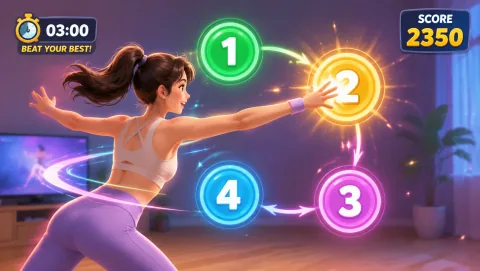
Large visual targets can be touched, pointed to, or reached toward. If you use a webcam-based game, test it beforehand and choose slow, forgiving rounds with large targets.
Group story building:
One person starts a sentence and each participant adds a line. Staff can use picture prompts if the group needs help getting started.
Team sorting challenge:
Sort picture cards by category, decade, color, location, or sequence. The task is cooperative and easy to scale.
Keep sessions short
Ten to twenty minutes is enough for many groups. Have a seated alternative ready and make opting out normal.
The operational test is simple: can another staff member run the activity tomorrow without needing a long briefing? If not, simplify it.
The useful design question is how much choice the participant has. Music, accuracy, memory, teamwork, and prediction can create plenty of game value without relying on fast footwork. A good group format includes the room without ranking people's limitations.
Keep the social pressure lower than the benefit
Best fit: this is useful when people can join for a short reset, understand the invitation immediately, and leave without having to explain why they are sitting out.
Limit: it is a poor choice when participation is treated as a performance, the activity competes with a serious meeting, or colleagues have very different comfort levels with cameras and movement.
If you are choosing: If you are choosing between ideas, prefer a short optional round with a personal target over a public leaderboard. The goal is an easier break, not another workplace metric.