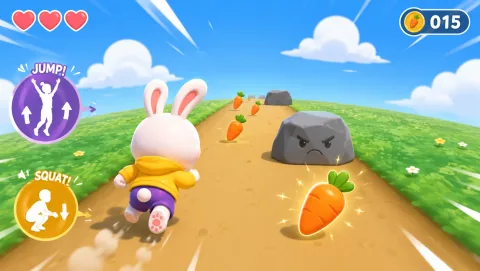
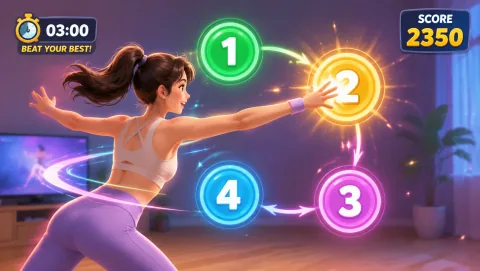
Gamified exercise—often called exergaming—adds game mechanics such as scores, targets, levels, rhythm, competition, or feedback to physical activity. The idea is intuitive: if movement is more enjoyable, people may be more willing to do it again.
The evidence is promising in some contexts, but it is not a simple “games solve exercise adherence” story.
Many adults need a smaller commitment, not a more sophisticated workout. Feedback such as skill, mood, score, or simply less sitting can be more motivating in the moment than an estimated calorie number. The aim is to make movement easier to return to.
What research suggests
A 2022 systematic review of 29 studies in young adults examined intensity, perceived exertion, enjoyment, and adherence. The authors concluded that some exergames can reach moderate-to-vigorous intensity and may help initial exercise adherence by lowering perceived exertion and increasing enjoyment.
That finding matters, but it has limits. Exergames vary enormously: a light hand-tracking game and a vigorous VR boxing game should not be treated as the same intervention.
For adults, the hardest part is often starting rather than knowing what movement is available. Leaving room for ten-minute days makes consistency easier and does not stop you from doing more when you have momentum. The aim is to make movement easier to return to.
Why games may help
Several mechanisms are plausible:
- immediate feedback;
- visible progress;
- distraction from effort;
- music and rhythm;
- competition;
- social play;
- skill development;
- shorter, repeatable rounds.
These features can make movement feel less monotonous.
A sustainable active routine usually has a very low-friction version. Leaving room for ten-minute days makes consistency easier and does not stop you from doing more when you have momentum. The aim is to make movement easier to return to.
What games do not solve
Gamification does not remove barriers such as pain, lack of time, inaccessible environments, poor sleep, medical limitations, or equipment cost.
Novelty can also fade. A game that is exciting for one week may not be enough for a six-month routine.
It helps to judge movement by repeatability before ambition. Leaving room for ten-minute days makes consistency easier and does not stop you from doing more when you have momentum. The aim is to make movement easier to return to.
Where browser motion games fit
Webcam games such as MovePlay reduce one barrier: specialized hardware. They can make short movement sessions easy to start at home or work.
But MovePlay should not claim that playing its games will automatically produce adherence, fitness, or weight-loss outcomes. Those outcomes require direct study.
The useful question is what you would still do on a busy or low-energy day. Leaving room for ten-minute days makes consistency easier and does not stop you from doing more when you have momentum. The aim is to make movement easier to return to.
A practical way to use gamification
Use active games when they solve a real problem for you—especially boredom or start-up friction. Combine them with walking, strength, mobility, sport, or other activity you enjoy.
The evidence supports treating enjoyment as relevant. It does not support treating every gamified activity as an evidence-proven fitness program.
Many adults need a smaller commitment, not a more sophisticated workout. Leaving room for ten-minute days makes consistency easier and does not stop you from doing more when you have momentum. The aim is to make movement easier to return to.
Judge the format by the device and the room
Best fit: start here when the device is already available, the camera view is understandable, and the activity can be completed without moving furniture or sharing more video than necessary.
Limit: it is a weaker choice when the connection is unstable, the frame is crowded, the light makes tracking unreliable, or the player needs a movement the camera cannot read consistently.
If you are choosing: If you are choosing between a digital and an offline version, test the first cue before choosing the game. Use the offline option when it gives clearer feedback or a more comfortable way to participate.