An extra five or ten minutes at the end of a lesson is too short for new content but long enough for the room to unravel. A good time filler keeps students engaged without creating a transition that takes longer than the activity.
A classroom game earns its place when it fits the room, the clock, and the lesson. Rules should be fast to explain, participation should not create a long queue, and the room needs a clear route back to learning. The teacher should finish with more control of the room, not less.
Activities that work in a real classroom
Fast academic games
Twenty questions: Use a person, concept, vocabulary word, or object from the current unit.
Odd one out: Give four terms and ask students which does not belong—and why.
Category sprint: In pairs, list as many examples of a category as possible in two minutes.
Explain it badly: Students describe a concept without using three obvious words.
Set the finish signal before the first movement so students know exactly what happens when the round ends.
Low-pressure creative tasks
One-minute sketch: Draw a concept, scene, or ridiculous prompt.
Alternative ending: Write three sentences changing the end of a story or historical event.
Design challenge: Create a logo, poster, invention, or solution using a single constraint.
For school use, I would always think about the ending before starting the activity. Rules should be fast to explain, participation should not create a long queue, and the room needs a clear route back to learning. The teacher should finish with more control of the room, not less.
Movement fillers
Use simple beside-the-desk activities:
- mirror movement;
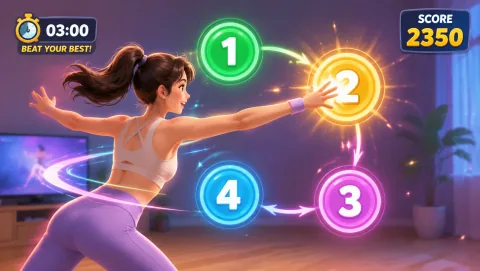
- four-direction reaches;
- movement memory;
- balance challenge;
- stand-and-freeze cues.
A short projected reaction activity can also work if the technology is already part of the classroom routine.
In a classroom, an activity has to work for the teacher as well as the students. A final freeze, countdown, seated cue, or retrieval question can make a two-minute break genuinely useful instead of creating five minutes of recovery. The teacher should finish with more control of the room, not less.
Quiet fillers for classes that need to come down, not up
Try silent reading, a visual puzzle, journaling, doodle prompts, or “three things I learned / one question I still have.”
Quiet does not have to mean motionless. Slow mirror movements, balance, breathing with a visual cue, or silent sequencing can change posture and attention without raising the room's volume.
What makes it usable for a teacher
The most important classroom detail is often the transition nobody puts in the title. A final freeze, countdown, seated cue, or retrieval question can make a two-minute break genuinely useful instead of creating five minutes of recovery. The teacher should finish with more control of the room, not less.
Match the filler to what comes next:
If dismissal is in five minutes, avoid a highly competitive game that students will resist ending. If another lesson follows, a brief movement break may be exactly what they need.
Keep a visible menu
Put six recurring options on a slide or classroom wall. When students finish early, choose one without spending two minutes debating what to do.
Time fillers work best when they feel intentional rather than like punishment for finishing efficiently. Keep them short, low-stakes, and easy to stop.
One thing I would not ignore
Teachers benefit more from reliable formats than from endless novelty. A final freeze, countdown, seated cue, or retrieval question can make a two-minute break genuinely useful instead of creating five minutes of recovery. The teacher should finish with more control of the room, not less.
The best break has an exit
A classroom game earns its place when it fits the room, the clock, and the lesson. A final freeze, countdown, seated cue, or retrieval question can make a two-minute break genuinely useful instead of creating five minutes of recovery. The teacher should finish with more control of the room, not less.
Make the activity work in the real timetable
Best fit: use this when the teacher can explain one visible rule, keep the first turn brief, and give students a clear way to watch, lead, or pause without being singled out.
Limit: it is a poor fit when setup takes longer than the learning goal, the room cannot be reset safely, or the scoring rewards speed over control. A lower-tech version may teach the same idea better.
If you are choosing: If you are choosing between formats, begin with the option that needs the fewest materials and the least movement across the room. Test one round before committing the whole class.