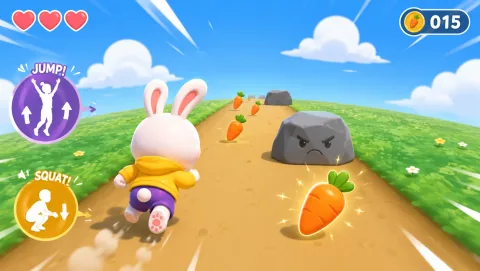
Audio can make games more engaging, but it should not always be required. Silent or visual-first camera games are useful in classrooms, libraries, shared offices, noisy events, and for players who prefer visual cues.
The player's actual position is the right place to evaluate the experience. Testing with the real chair, screen, lighting, and player reveals problems that a feature checklist easily misses. Inclusive design is often less about adding modes than removing unnecessary obstacles.
Look for visual state changes
Targets should clearly show when they appear, are hit, are missed, or become inactive. Important information should not exist only as a sound effect.
The goal is meaningful participation, not identical movement. Testing with the real chair, screen, lighting, and player reveals problems that a feature checklist easily misses. Inclusive design is often less about adding modes than removing unnecessary obstacles.
Accessibility is strongest when alternatives exist before anyone has to ask for them. Target height, reach distance, camera angle, reaction time, contrast, sound dependence, and role design can all create or remove barriers. When choices are visible from the start, the activity feels more natural for everyone.
A feature label does not tell you whether an activity is comfortable in the real room. Target height, reach distance, camera angle, reaction time, contrast, sound dependence, and role design can all create or remove barriers. When choices are visible from the start, the activity feels more natural for everyone.
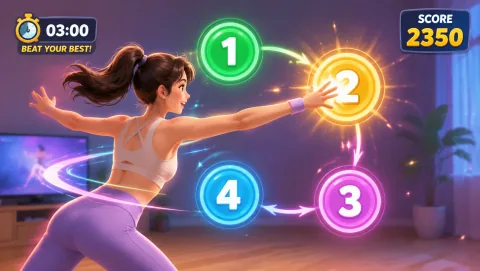
Use visible countdowns
A timer, progress bar, or on-screen “ready” state helps players know when a round starts and ends without listening for a cue.
Inclusive motion play is mostly a collection of practical design choices. Target height, reach distance, camera angle, reaction time, contrast, sound dependence, and role design can all create or remove barriers. When choices are visible from the start, the activity feels more natural for everyone.
Prefer simple controls
If the game uses body movement as the control, visual instructions should show the required action before play begins.
Difficulty can come from memory, choices, or timing instead of requiring a larger physical range.
The player's actual position is the right place to evaluate the experience. Target height, reach distance, camera angle, reaction time, contrast, sound dependence, and role design can all create or remove barriers. When choices are visible from the start, the activity feels more natural for everyone.
Test mute mode:
Some games technically run without sound but become confusing because scoring or transitions are audio-only. Mute the device and play a complete round before recommending the game for silent use.
Add captions where spoken instructions matter
If narration or instructions are important, captions or written prompts should be available.
A game that works without audio is more flexible in real settings. That is an accessibility and operational advantage, not just a convenience.
The goal is meaningful participation, not identical movement. Target height, reach distance, camera angle, reaction time, contrast, sound dependence, and role design can all create or remove barriers. When choices are visible from the start, the activity feels more natural for everyone.
Make the activity work in the real timetable
Best fit: use this when the teacher can explain one visible rule, keep the first turn brief, and give students a clear way to watch, lead, or pause without being singled out.
Limit: it is a poor fit when setup takes longer than the learning goal, the room cannot be reset safely, or the scoring rewards speed over control. A lower-tech version may teach the same idea better.
If you are choosing: If you are choosing between formats, begin with the option that needs the fewest materials and the least movement across the room. Test one round before committing the whole class.