Older elementary and middle-school students often reject brain breaks that feel designed for younger children. The solution is not to remove movement; it is to use activities with more challenge and less performative enthusiasm.
In a classroom, an activity has to work for the teacher as well as the students. Movement should support the teaching goal or the reset the teacher actually needs, not exist just because technology makes it possible. The teacher should finish with more control of the room, not less.
Activities that work in a real classroom
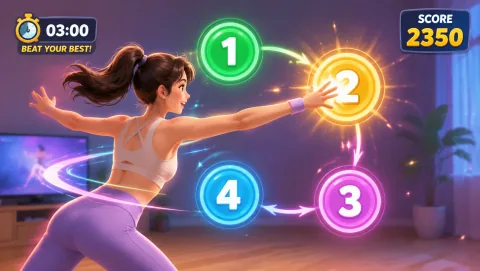
Reaction challenge
Show numbers, colors, or arrows and assign a response. Increase speed over 60–90 seconds.
Call it a reaction test, not a wiggle break.
Set the finish signal before the first movement so students know exactly what happens when the round ends.
Silent coordination sequence
Students copy a pattern of claps, taps, reaches, or steps without talking. Make each round slightly harder.
The most important classroom detail is often the transition nobody puts in the title. Movement should support the teaching goal or the reset the teacher actually needs, not exist just because technology makes it possible. The teacher should finish with more control of the room, not less.
Standing quiz
Use content questions with two or four response positions: left/right, stand/sit, or hand signals. Keep the pace fast.
Teachers benefit more from reliable formats than from endless novelty. Movement should support the teaching goal or the reset the teacher actually needs, not exist just because technology makes it possible. The teacher should finish with more control of the room, not less.
Balance challenge
Try a 30-second balance variation, then switch sides. Let students opt for a stable two-foot position if needed.
A classroom game earns its place when it fits the room, the clock, and the lesson. Movement should support the teaching goal or the reset the teacher actually needs, not exist just because technology makes it possible. The teacher should finish with more control of the room, not less.
Quick puzzle race
Put a logic problem or visual puzzle on the board. Students solve individually or in pairs for two minutes.
A brain break does not need to be physical every time; changing the cognitive task can also provide a reset.
For school use, I would always think about the ending before starting the activity. Movement should support the teaching goal or the reset the teacher actually needs, not exist just because technology makes it possible. The teacher should finish with more control of the room, not less.
Webcam or screen reaction game
For classes comfortable with technology, a short projected motion challenge can work. One student plays while others predict or mirror, or small groups rotate through a station.
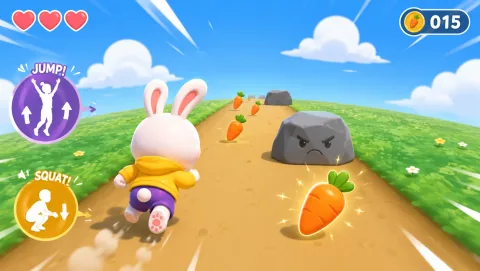
Choose games with neutral or arcade-style presentation. Anything that looks preschool-oriented will lose the room before the first round.
Music without compulsory dancing
Use a rhythm-copy challenge, lyric-free beat, or short “identify the song” round rather than demanding that everyone dance.
Give students some choice
Offer three options: movement, puzzle, or quiet reset. Let the class vote occasionally.
Older students are more likely to participate when they feel the activity respects them. The tone matters as much as the exercise.
What makes it usable for a teacher
In a classroom, an activity has to work for the teacher as well as the students. The best formats can be repeated with new prompts so students know how to play before the teacher has finished explaining. The teacher should finish with more control of the room, not less.
One thing I would not ignore
The most important classroom detail is often the transition nobody puts in the title. The best formats can be repeated with new prompts so students know how to play before the teacher has finished explaining. The teacher should finish with more control of the room, not less.
The teacher should get the room back
Teachers benefit more from reliable formats than from endless novelty. The best formats can be repeated with new prompts so students know how to play before the teacher has finished explaining. The teacher should finish with more control of the room, not less.
Make the activity work in the real timetable
Best fit: use this when the teacher can explain one visible rule, keep the first turn brief, and give students a clear way to watch, lead, or pause without being singled out.
Limit: it is a poor fit when setup takes longer than the learning goal, the room cannot be reset safely, or the scoring rewards speed over control. A lower-tech version may teach the same idea better.
If you are choosing: If you are choosing between formats, begin with the option that needs the fewest materials and the least movement across the room. Test one round before committing the whole class.