Some children come home from school ready to collapse. Others walk through the door as if they have been storing energy all day.
For the second group, asking for homework, quiet play, or dinner-table manners immediately can be a hard transition. A short period of movement first often makes the rest of the afternoon easier.
Give them a decompression activity before asking for focus
The aim is not to run a formal workout. Ten or fifteen minutes of something active is often enough to mark the end of the school day.
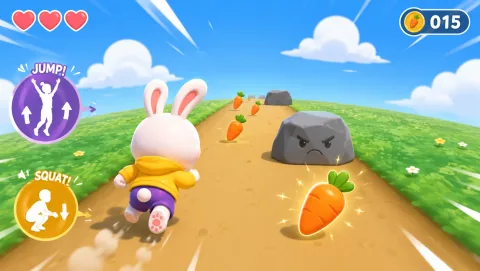
Good options include a walk, a playground stop, scooter time, balloon volleyball, a short dance playlist, a simple target game, or a browser motion game. The activity should be easy enough to start that it does not create another negotiation.
For a child who likes scores and competition, a quick Reaction or Whack A Mole session can work because there is something to chase besides “you need exercise.” For a child who hates screens after school, go outside or use a physical game instead. There is no reason to force one format.
Do not confuse “needs movement” with “needs maximum intensity”
A child can be restless without needing to sprint around the house. Especially in apartments, controlled movement is often better: side steps, reaching, dance, balance, a soft target toss, or a no-jump game.
If an activity leaves the child more wound up and argumentative every time, it is not serving the transition. Try something rhythmic or lower intensity instead.
Use a predictable sequence
Children often handle after-school time better when the order is familiar. For example:
- snack and water;
- ten minutes of movement;
- homework or quiet activity;
- free play;
- dinner.
That sequence can change, but predictability reduces the daily debate over what happens first.
Let the child help choose the active option
Keep three or four choices that you are willing to allow: outside, dance, a physical game, or one short digital game. Choice gives the child some control without leaving the afternoon completely open-ended.
After-school movement is less about burning every last bit of energy than about helping the child change gears. If they can move, reset, and then settle into the next part of the day, the activity has done its job.
Make the activity work in the real timetable
Best fit: use this when the teacher can explain one visible rule, keep the first turn brief, and give students a clear way to watch, lead, or pause without being singled out.
Limit: it is a poor fit when setup takes longer than the learning goal, the room cannot be reset safely, or the scoring rewards speed over control. A lower-tech version may teach the same idea better.
If you are choosing: If you are choosing between formats, begin with the option that needs the fewest materials and the least movement across the room. Test one round before committing the whole class.