Rain, smoke, extreme heat, snow, illness, or simply a parent who cannot spend the afternoon outside can turn a normal day into an indoor one. The problem is rarely a shortage of ideas. The problem is finding activities that fit the room, the child’s energy, and the amount of setup you are willing to tolerate.
This list is deliberately mixed. Some activities burn energy, some absorb attention, and some are useful because they are easy for a child to continue without an adult hovering nearby.
Eight ways to get moving indoors
- Balloon volleyball. A sofa cushion makes a good net, and the balloon moves slowly enough for younger children to keep a rally going. Skip it if there is a ceiling fan, fragile shelving, or a television directly beside the play area.
- Animal walks. Bear crawl, crab walk, penguin walk, frog jump. Better for short bursts than long sessions because the novelty is part of the appeal.
- Freeze dance. One of the easiest choices for several children because the rules need almost no explanation. Three songs is usually plenty.
- Hallway bowling. Empty plastic bottles and a soft ball turn a narrow hallway into a simple target game.
- Tape-line challenge. If you already have painter’s tape, make straight, curved, or zigzag paths for walking, hopping, or balancing.
- Sock toss. Rolled-up socks plus a laundry basket. Move the basket farther away after each successful round.
- Movement call-outs. Assign actions to numbers or colors and call them in changing sequences. This works even in a small room because nobody has to run.
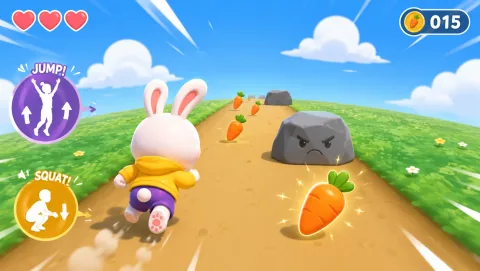
- Webcam motion games. Useful when you want active play without pulling out physical equipment. Reaching and hand-tracking games usually need less room than full-body jumping games.
Six activities that can hold attention for longer
- Cardboard build. Give a delivery box a job: turn it into a shop, spaceship, pet house, or marble run.
- Paper airplane test lab. Make two designs and compare distance, accuracy, or flight time.
- Comic-strip challenge. Six panels, one character, one problem, one ending. The constraint helps children get started.
- Design a board game. Keep version one simple: a path, one decision, one way to win. Children can refine it later.
- Photography hunt. Photograph five circles, three reflections, one interesting shadow, and something that looks like a face.
- Build-and-test challenge. Make a bridge, tower, ramp, or container and give it a practical test instead of stopping when it looks finished.
Six calmer options for when everyone needs to come down a level
- Audiobook plus drawing. The story supplies the structure while the hands stay busy.
- Jigsaw or logic puzzle. Pick something the child can mostly manage alone; frustration defeats the purpose.
- Memory tray. Look at ten small objects for 30 seconds, cover them, and see how many can be recalled.
- Reading fort. The useful part is reading in the fort, not spending 45 minutes constructing an architectural masterpiece.
- Sorting challenge. Cards, LEGO, buttons, toy animals, or pantry items can be sorted by color, category, size, or another rule the child invents.
- Longer independent project. Give the child something they can return to over several indoor days: a model, comic, stop-motion film, scrapbook, or cardboard city.
A good indoor day alternates rather than escalates
You do not need to run all twenty. In fact, moving from one activity to another every ten minutes is exhausting for adults and often makes children more dependent on the next prompt.
A more sustainable rhythm is movement, food or water, a focused activity, some unstructured time, and another short active reset later. Screens can fit into that day too. The useful distinction is not “screen or no screen” but whether the screen is asking the child to watch passively or to create, solve, respond, or move.
If you use a webcam activity, clear the floor and check camera framing before the child starts. A five-minute setup is fine when you have time; it is not fine when everyone is already irritable and you are trying to rescue the afternoon.
Choose it for the group in front of you
Best fit: this works when the ages and confidence levels can share one simple goal, with an adult able to explain the first round and step in if the room loses focus.
Limit: it is a weaker choice when children are tired, the ages are far apart, or one person is expected to perform in front of everyone. A quieter role or a shorter round may be the better answer.
If you are choosing: start with the smallest version that can succeed in the available space. Add speed, scoring, or competition only after the group understands the basic action.