Two minutes is enough for a genuine transition if the activity needs no materials and no explanation beyond one sentence.
These are designed for the gap between lessons, not for a full fitness session.
Teachers benefit more from reliable formats than from endless novelty. If the projector, camera, or permissions need live troubleshooting, the activity is not low-prep that day. That is what turns a fun idea into a classroom tool.
Activities that work in a real classroom
Reach, squat, reach
For 30 seconds, alternate overhead reaches and comfortable squats. Then add left-right reaches for another 30 seconds. Finish with slower movement.
Set the finish signal before the first movement so students know exactly what happens when the round ends.
March and freeze
March in place. Every ten seconds, freeze for three seconds. On the final freeze, students sit.
A classroom game earns its place when it fits the room, the clock, and the lesson. If the projector, camera, or permissions need live troubleshooting, the activity is not low-prep that day. That is what turns a fun idea into a classroom tool.
Four-corner reach
Students stay beside their desks. Call upper left, upper right, lower left, lower right. They reach toward the imaginary corner.
For school use, I would always think about the ending before starting the activity. If the projector, camera, or permissions need live troubleshooting, the activity is not low-prep that day. That is what turns a fun idea into a classroom tool.
Shoulder reset
Slow shoulder rolls, arm circles, overhead reaches, and a gentle twist. This is useful after a long writing or computer block.
In a classroom, an activity has to work for the teacher as well as the students. Movement should support the teaching goal or the reset the teacher actually needs, not exist just because technology makes it possible. That is what turns a fun idea into a classroom tool.
Balance switch
Stand on one foot for ten seconds, switch, then repeat with a different arm position. Students who prefer can keep one hand on the desk.
The most important classroom detail is often the transition nobody puts in the title. Movement should support the teaching goal or the reset the teacher actually needs, not exist just because technology makes it possible. That is what turns a fun idea into a classroom tool.
Rhythm copy
Clap, tap, or step a short pattern. Students copy it. Use three or four patterns, then stop.
Visual reaction
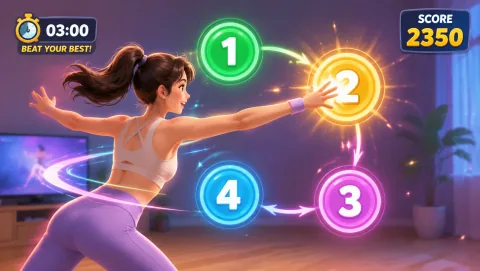
Show arrows, colors, or numbers on the board and assign a movement to each. Keep the rules simple enough that the first cue can appear immediately.
What makes it usable for a teacher:
Teachers benefit more from reliable formats than from endless novelty. Movement should support the teaching goal or the reset the teacher actually needs, not exist just because technology makes it possible. That is what turns a fun idea into a classroom tool.
Why two minutes can work
The purpose is not to produce a workout. It is to interrupt a long period of the same posture and attention demand.
WHO guidance notes that all physical activity counts, and public-health guidance no longer requires activity to occur in ten-minute bouts to “count.” In a classroom, that supports a practical approach: short movement opportunities can be part of the day even when a long exercise block is not available.
The best two-minute break ends on time. If students need five minutes of instructions and settling, the activity is too complicated for this slot.
One thing I would not ignore
A classroom game earns its place when it fits the room, the clock, and the lesson. Movement should support the teaching goal or the reset the teacher actually needs, not exist just because technology makes it possible. That is what turns a fun idea into a classroom tool.
Use what you can recover from
For school use, I would always think about the ending before starting the activity. Movement should support the teaching goal or the reset the teacher actually needs, not exist just because technology makes it possible. That is what turns a fun idea into a classroom tool.
Make the activity work in the real timetable
Best fit: use this when the teacher can explain one visible rule, keep the first turn brief, and give students a clear way to watch, lead, or pause without being singled out.
Limit: it is a poor fit when setup takes longer than the learning goal, the room cannot be reset safely, or the scoring rewards speed over control. A lower-tech version may teach the same idea better.
If you are choosing: If you are choosing between formats, begin with the option that needs the fewest materials and the least movement across the room. Test one round before committing the whole class.