A 12-day movement challenge works best when each day is short enough to complete even during a busy holiday schedule. Think five to ten minutes, not a new fitness program.
The calendar gives context, but it should not be doing all the creative work. Guests, mixed ages, bad weather, school excitement, or hours spent indoors all change what is realistic. Local weather, traditions, and school schedules should always win over a generic themed list.
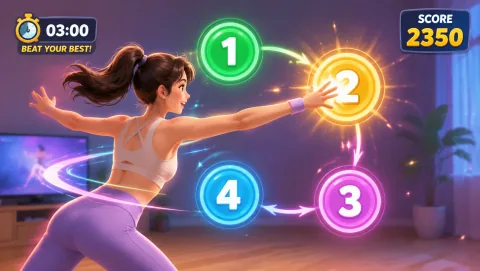
Day 1: one-minute reach challenge
Touch high, low, left, and right targets.
Holiday and weather content is most useful when it respects how the day actually feels. Guests, mixed ages, bad weather, school excitement, or hours spent indoors all change what is realistic. Local weather, traditions, and school schedules should always win over a generic themed list.
Seasonal planning often improves when the schedule is made smaller, not larger. Guests, mixed ages, bad weather, school excitement, or hours spent indoors all change what is realistic. Local weather, traditions, and school schedules should always win over a generic themed list.
Day 2: two squat rounds
Use comfortable depth and short sets.
The theme should support the activity rather than carry a weak one. Guests, mixed ages, bad weather, school excitement, or hours spent indoors all change what is realistic. Local weather, traditions, and school schedules should always win over a generic themed list.
Day 3: three-song movement break
Choose three songs and move for one chorus from each.
Seasonal activities work when the occasion changes the advice, not merely the vocabulary. Keep rules quick, setup light, and at least one calmer option available for the point when energy drops. Local weather, traditions, and school schedules should always win over a generic themed list.
Day 4: four-direction reaction:
Assign a movement to up, down, left, and right.
Day 5: five family poses:
Take a photo if everyone wants to.
Day 6: six-minute walk
Indoors or outdoors, depending on weather.
The calendar gives context, but it should not be doing all the creative work. Keep rules quick, setup light, and at least one calmer option available for the point when energy drops. Local weather, traditions, and school schedules should always win over a generic themed list.
Day 7: seven target hits per side:
Use paper targets or a camera reaction game.
Day 8: eight slow knee lifts per side:
Keep it controlled.
Day 9: nine-item movement scavenger hunt:
Find items around the house with a movement between each clue.
Day 10: ten-minute family game:
Choose something everyone can join or watch.
Day 11: eleven rhythm repetitions:
Clap, tap, or step a short pattern.
Day 12: choose your favorite and repeat it
The final day should reinforce what people actually enjoyed.
Treat the challenge as a holiday activity, not a calorie target. Missing a day does not require catching up.
Holiday and weather content is most useful when it respects how the day actually feels. Keep rules quick, setup light, and at least one calmer option available for the point when energy drops. Local weather, traditions, and school schedules should always win over a generic themed list.
Make the activity work in the real timetable
Best fit: use this when the teacher can explain one visible rule, keep the first turn brief, and give students a clear way to watch, lead, or pause without being singled out.
Limit: it is a poor fit when setup takes longer than the learning goal, the room cannot be reset safely, or the scoring rewards speed over control. A lower-tech version may teach the same idea better.
If you are choosing: If you are choosing between formats, begin with the option that needs the fewest materials and the least movement across the room. Test one round before committing the whole class.