Ten minutes gives you enough time for a real burst of activity without needing to build a full exercise session. The most effective format is usually one or two simple games rather than ten tiny activities.
Below are several ways to use the time.
With children, the room and the timing matter as much as the idea itself. The best choice changes with energy: restless children need an outlet; tired children may need structure and calm instead. The goal is a reliable option the family can actually reuse.
Games I would try first
Option 1: reaction circuit
- 2 minutes: march and reach to warm up;
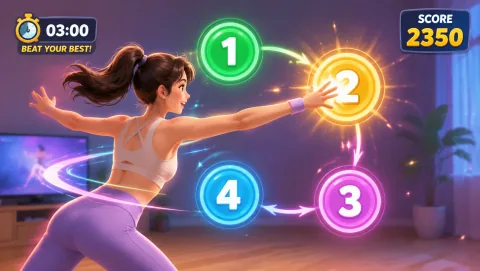
- 3 minutes: target-touch game;
- 3 minutes: move-and-freeze commands;
- 2 minutes: slow balance challenge.
This works in small spaces because most movement stays near one spot.
A parent usually needs something that works under ordinary conditions, not a perfect activity day. The best choice changes with energy: restless children need an outlet; tired children may need structure and calm instead. The goal is a reliable option the family can actually reuse.
Option 2: balloon game
Play balloon volleyball or balloon keep-up for ten minutes. Change the rule every two minutes:
- any body part;
- hands only;
- alternating hands;
- two players must alternate hits;
- final round: count the longest streak.
The rule changes keep one simple activity from getting stale.
In a real home, the deciding factor is often not how creative an activity sounds but how quickly a child can understand it. Watch whether the child asks for another round without prompting; that is better evidence than how impressive the idea looks. The goal is a reliable option the family can actually reuse.
Option 3: webcam game set
If your child enjoys scored games, use two movement styles rather than playing one game continuously.
For example:
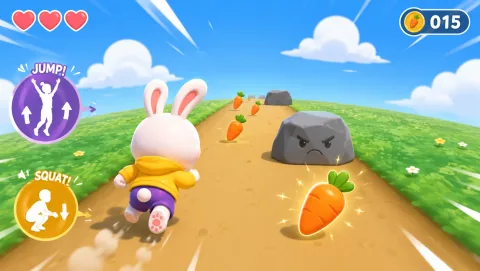
- two rounds of Fruit Slash for arm movement;
- two rounds of SquatPacman for lower-body movement;
- finish with one calmer reaction round.
The exact game matters less than changing the movement pattern. Full-body games also need enough room for safe play and camera framing.
For family use, I would put ease of starting ahead of novelty. Watch whether the child asks for another round without prompting; that is better evidence than how impressive the idea looks. The goal is a reliable option the family can actually reuse.
Option 4: music block
Choose three songs:
- one warm-up song;
- one faster dance or follow-along song;
- one slower final song.
Kids who do not enjoy freestyle dancing may prefer copying a parent or following simple movement cues.
The practical test is what happens after the first burst of excitement. Watch whether the child asks for another round without prompting; that is better evidence than how impressive the idea looks. The goal is a reliable option the family can actually reuse.
Option 5: skill challenge
Spend ten minutes trying to improve one score:
- sock toss accuracy;
- balance time;
- number of balloon hits;
- reaction score;
- memory movement sequence.
Personal bests create a challenge without requiring siblings or adults to compete directly.
Keep the first round short. If the child immediately asks to do it again, repeat before adding more rules.
How I would choose
With children, the room and the timing matter as much as the idea itself. Watch whether the child asks for another round without prompting; that is better evidence than how impressive the idea looks. The goal is a reliable option the family can actually reuse.
Make ten minutes easy to repeat
Do not use every active session to push intensity. Some days should be jumping and dodging; others can be reaching, balancing, and gentle movement.
A ten-minute game is most useful when it fits naturally into family life: after school, between homework blocks, before a shower, or during a rainy afternoon. Consistency matters more than making every session feel like a workout.
One thing I would not ignore
A parent usually needs something that works under ordinary conditions, not a perfect activity day. Watch whether the child asks for another round without prompting; that is better evidence than how impressive the idea looks. The goal is a reliable option the family can actually reuse.
What I would keep:
The aim is not to manufacture exhaustion. Give the energy a job, then make the next transition easier.
Make the activity work in the real timetable
Best fit: use this when the teacher can explain one visible rule, keep the first turn brief, and give students a clear way to watch, lead, or pause without being singled out.
Limit: it is a poor fit when setup takes longer than the learning goal, the room cannot be reset safely, or the scoring rewards speed over control. A lower-tech version may teach the same idea better.
If you are choosing: If you are choosing between formats, begin with the option that needs the fewest materials and the least movement across the room. Test one round before committing the whole class.